

“The damnation of animal life, the debasement of human life, the destructive conjugality between the two: It is not just the animals who are the victims of environmental devastation, but also the humans now inhabiting these landscapes” – Nick Brandt
尼克·布兰特是当代最具影响力的摄影师之一,他以其震撼人心的黑白影像而闻名,这些影像清晰地传达了环境破坏和气候变化对我们星球造成的毁灭性影响。.
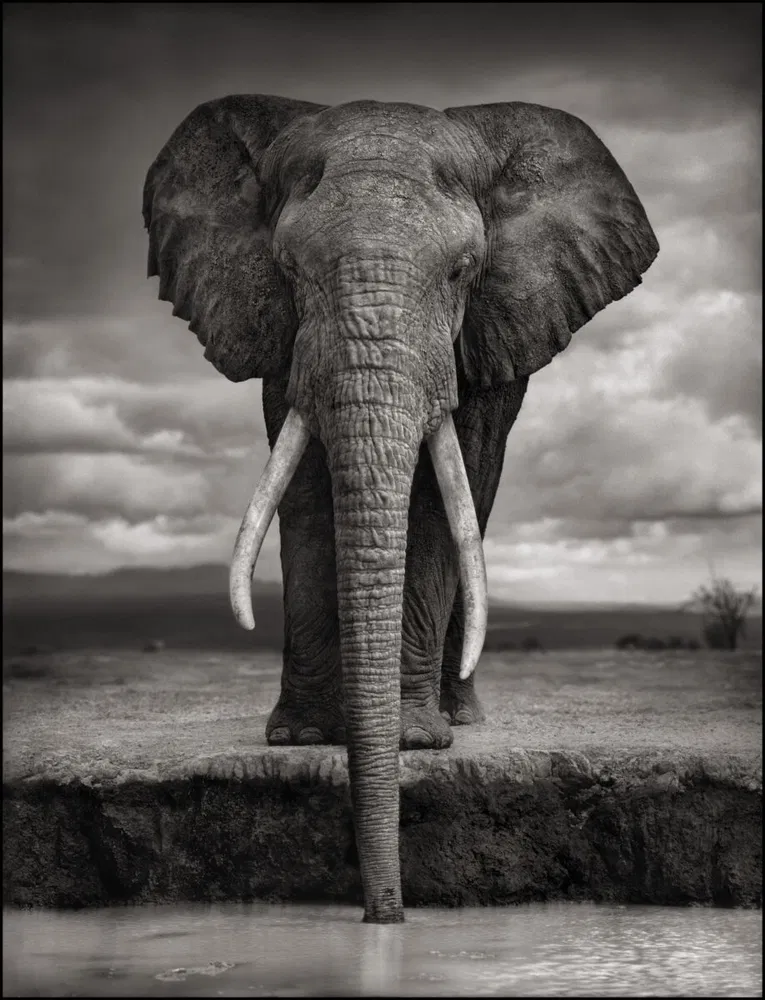
Born in London, in 1964, Brandt harbored both a love of the natural world, and an interest in photography (notably the work of Richard Avedon, Edward Steichen, and Diane Arbus) from an early age, and soon realized he could combine both, ‘to express his feelings about the escalating destruction at the hands of humans’.
He studied Painting and Film at the Central Saint Martins College of Arts and Design, in his home city, before relocating to California where he spent a number of years directing music videos for a host of world-renowned artists.
He began his inaugural photographic project, entitled, On this Earth, in 2001, the first of three-part series in which he captured the immense but rapidly fading beauty of East Africa. In order to ‘humanize’ them, Brandt used a medium-format camera loaded with 黑白 film to photograph animals in a state of ‘being’, a style more typical of classic portraiture than the colorful, action-packed images normally associated with nature photography.
“…I regard humans and animals as the same – sentient creatures who should be on an equal footing in terms of regard for life and welfare. Intelligence – at least the kind of intelligence that we recognize – should have no bearing. Would you treat Albert Einstein better than a ‘less intelligent’ autistic child? Of course not. So the same should apply to animals.”
He returned to the region numerous times between 2005 and 2008, releasing the series A Shadow Falls, in 2009, before completing the trilogy in 2013 with Across the Ravaged Land (the title of each designed to form a single, poignant, message).
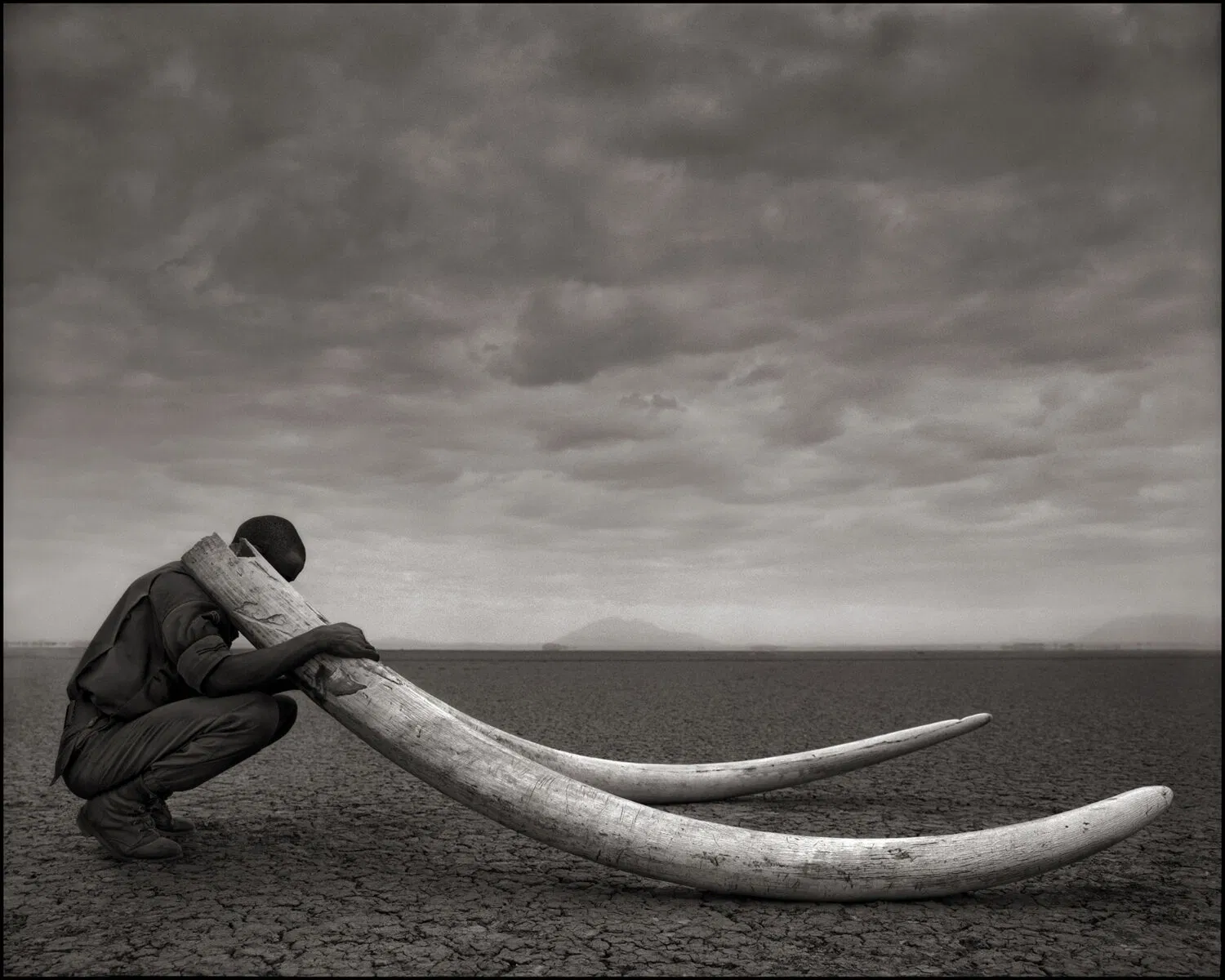
In addition to the striking animal portraiture of its two predecessors, the series introduced human subjects for the first time: Rangers from Brandt’s Big Life Foundation (which he launched three years earlier to help preserve critical ecosystems in Kenya and Tanzania), is pictured wielding the tusks of elephants killed by poachers.
Later in 2013, he released The Petrified, positioning dead animals that he found washed up on the shoreline of Tanzania’s Lake Natron, as though they were still alive, to striking effect, and returned to East Africa once again the following year, for the series Inherit the dust.
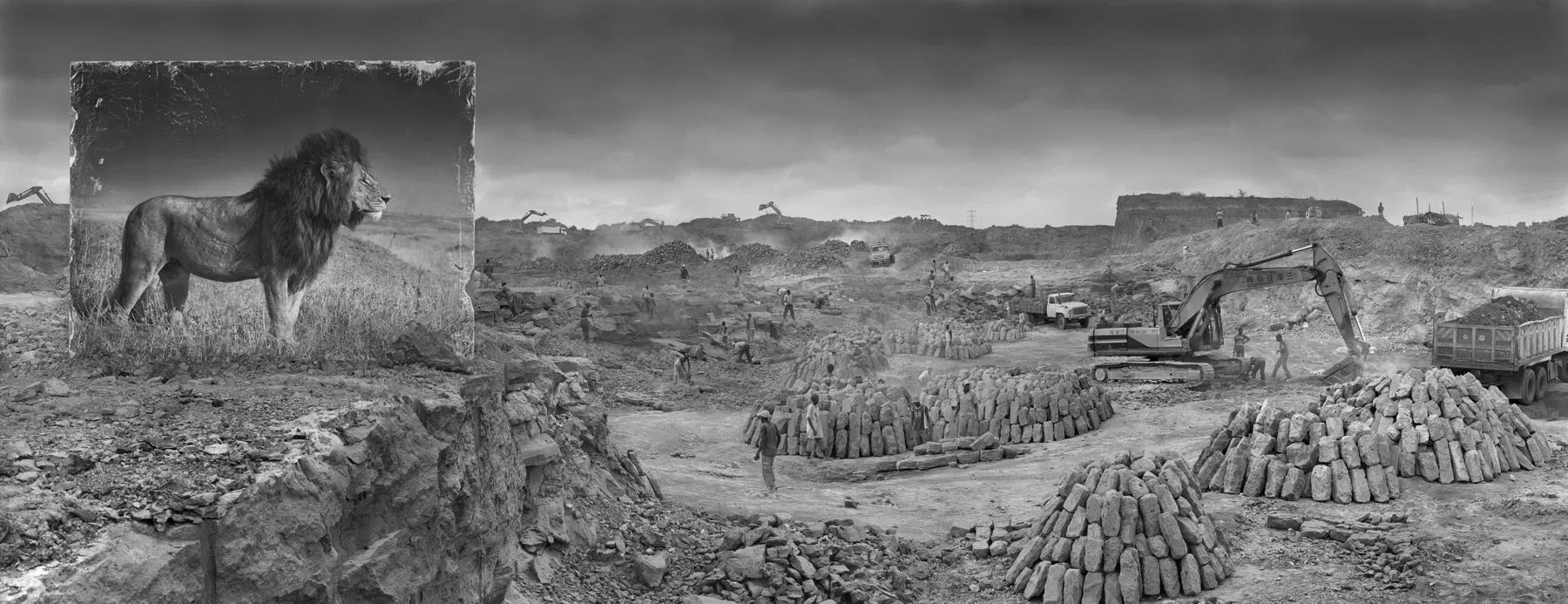
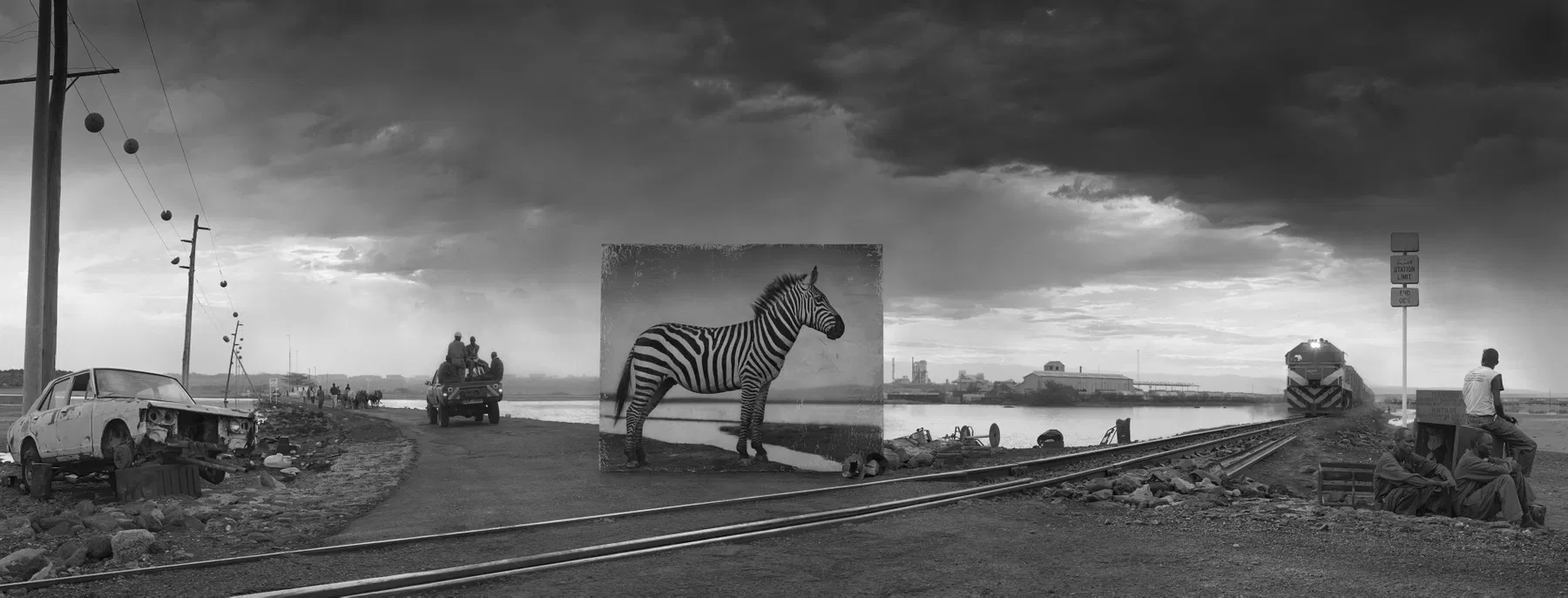
In order to display ‘the impact of humans on the dwindling amount of habitat left for the natural world’, he made life-size prints of animal portraits that he had captured previously, and placed them in locations they once roamed, but, due to human intervention, do so no longer.

The resultant large-scale panoramic photographs are uniquely powerful. Simultaneously beautiful and shocking, they convey the dramatic scale of destruction in the region, the majestic animals strike a deeply sad sight, juxtaposed against the quarries, factories, and rubbish heaps that once were vast open plains.
The monochrome tones, engender a dramatic and melancholic atmosphere which Brandt says, in addition to ‘stripping the image down to the essentials, thus forcing the viewer to focus on the graphic shapes and composition within the frame, is in keeping with the concept and subject matter’. Though photographed in East Africa, he asserts that it ‘could apply anywhere that animals used to roam’.
Building on this concept, though switching briefly and uncharacteristically to color, his 2019 series This Empty World focused on Masaai Ranch land, near Amboseli National Park in Kenya, one of the last unprotected landscapes, where animals and humans still live alongside one another.
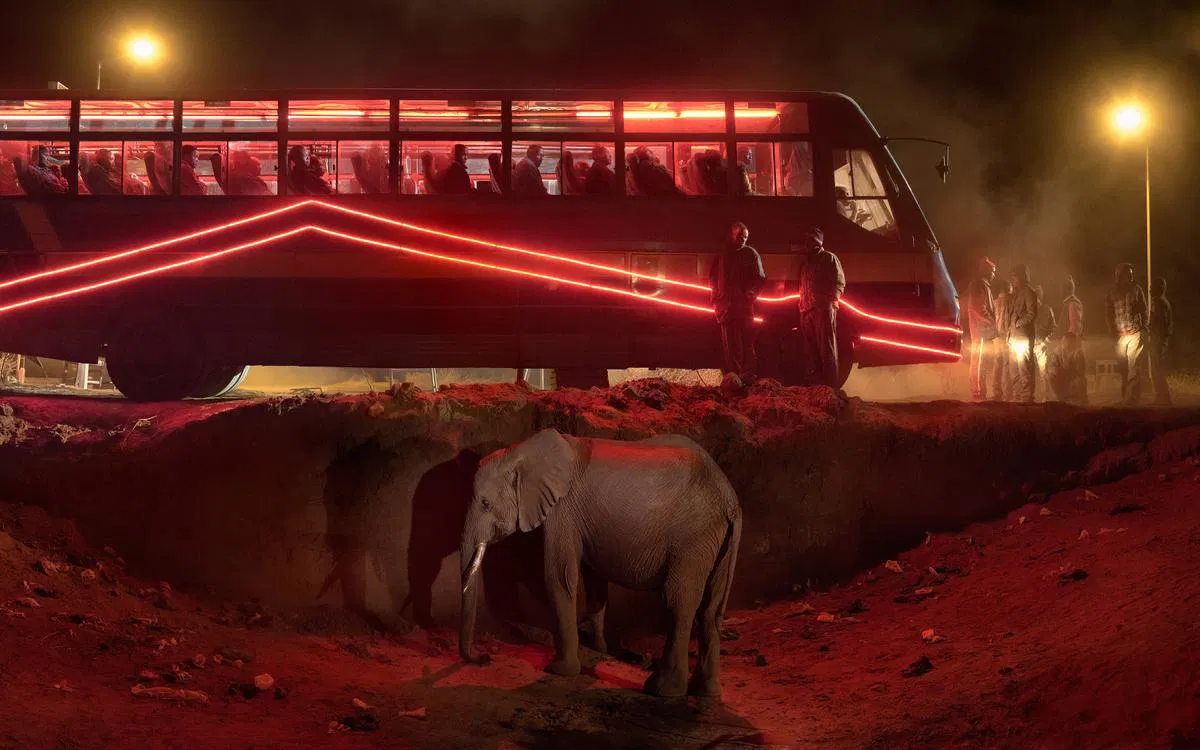
Each image resulted from two separate sequences shot weeks apart. For the first, he photographed animals that had wandered into a partially constructed set, which was subsequently completed and filled with people, before a second sequence was photographed from the exact same position as the previous one.
When visualizing the concept, Brandt said he ‘immediately imagined the photographs at night, with the ‘unnatural, often garish colors of the modern human world’, and thus, ‘black and white would have lacked modernity and diluted the sense of invasion’. An astute choice: the resulting composites engender a sense of discomfort at the incongruity of the animals amongst the urbanized surroundings.
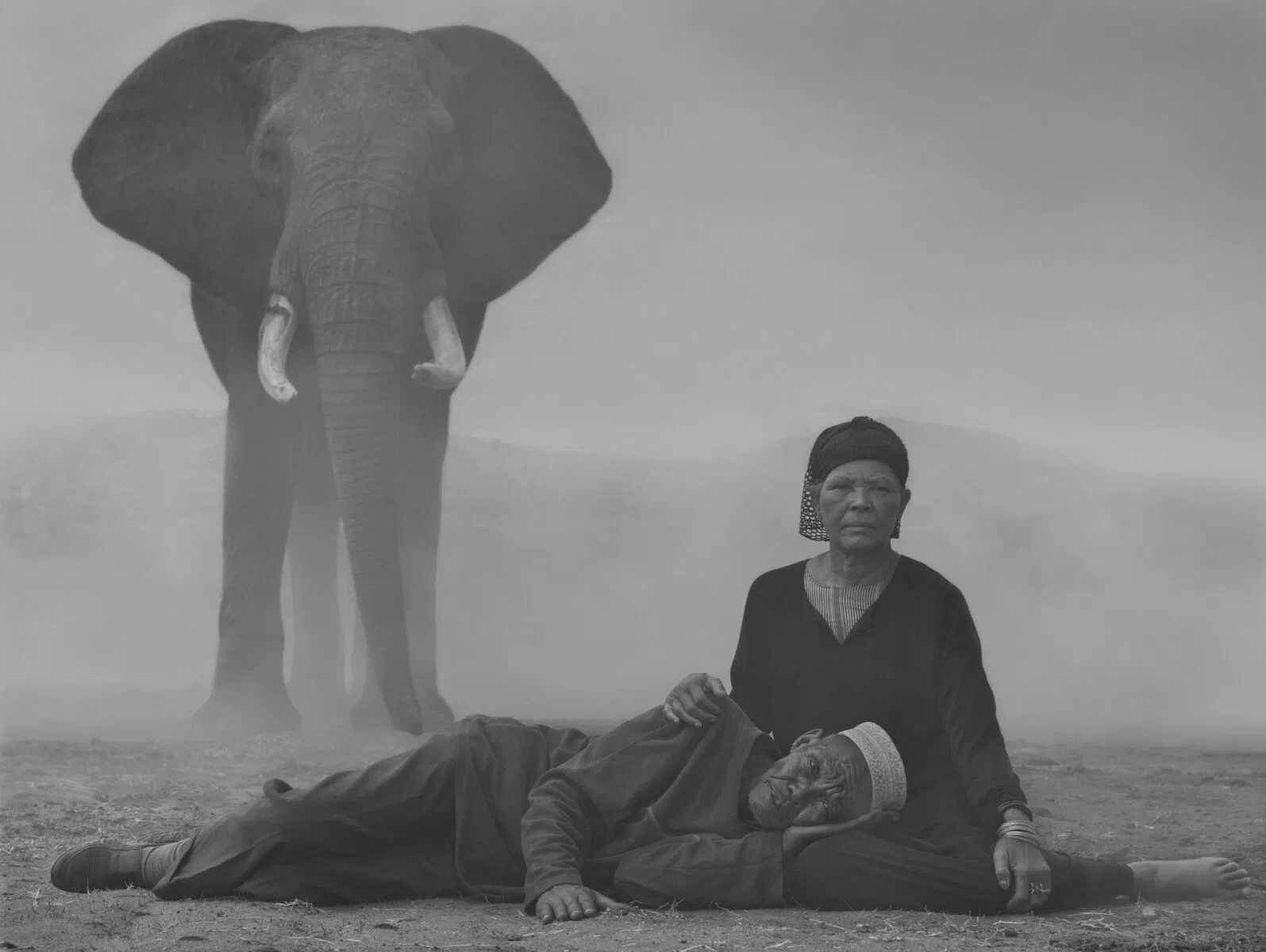
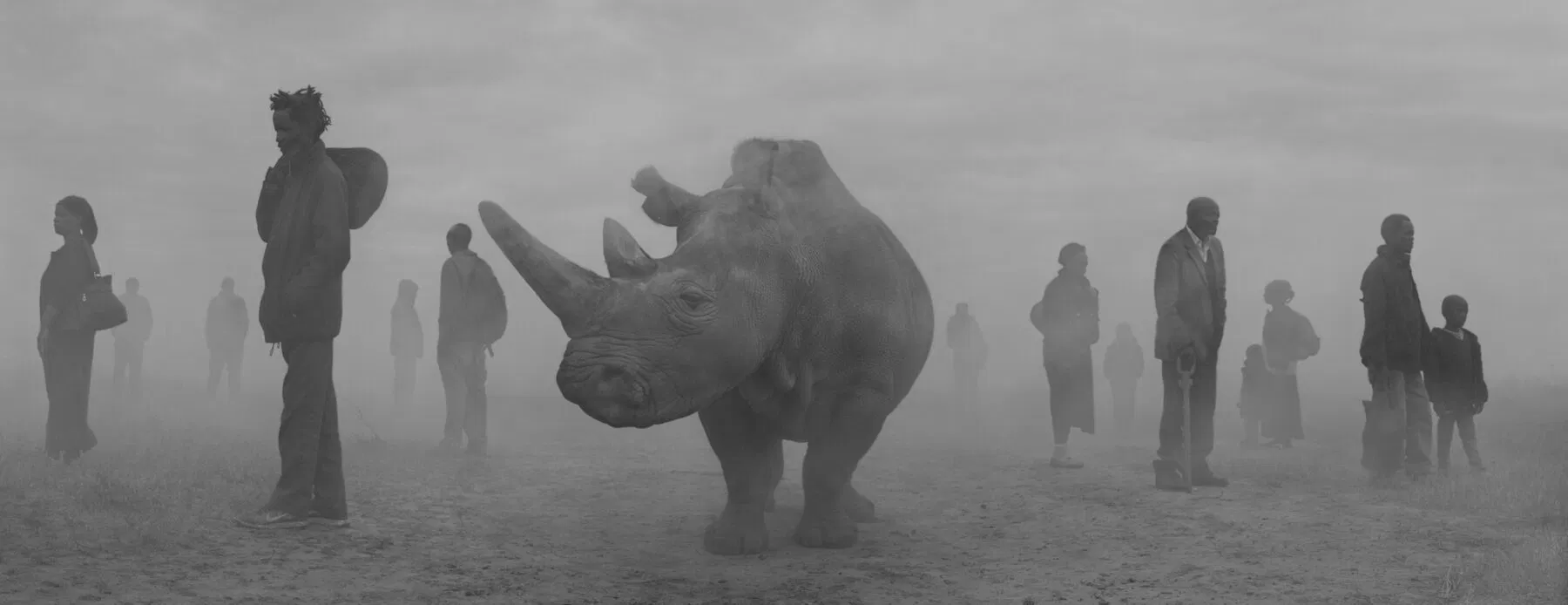
More recently, Brandt has been working on a three-part series entitled The Day May Break, the third part of which is still ongoing. Captured in Kenya, Zimbabwe, and Bolivia, the imagery depicts victims of climate change, rendered homeless by cyclones or whose livelihoods were destroyed by years of drought, alongside animals from sanctuaries, rescued due to the destruction of their habitat or poaching of their parents. Both were captured in a single frame, made possible due to the domestication of the animals most of whom can never be released back into the wild.
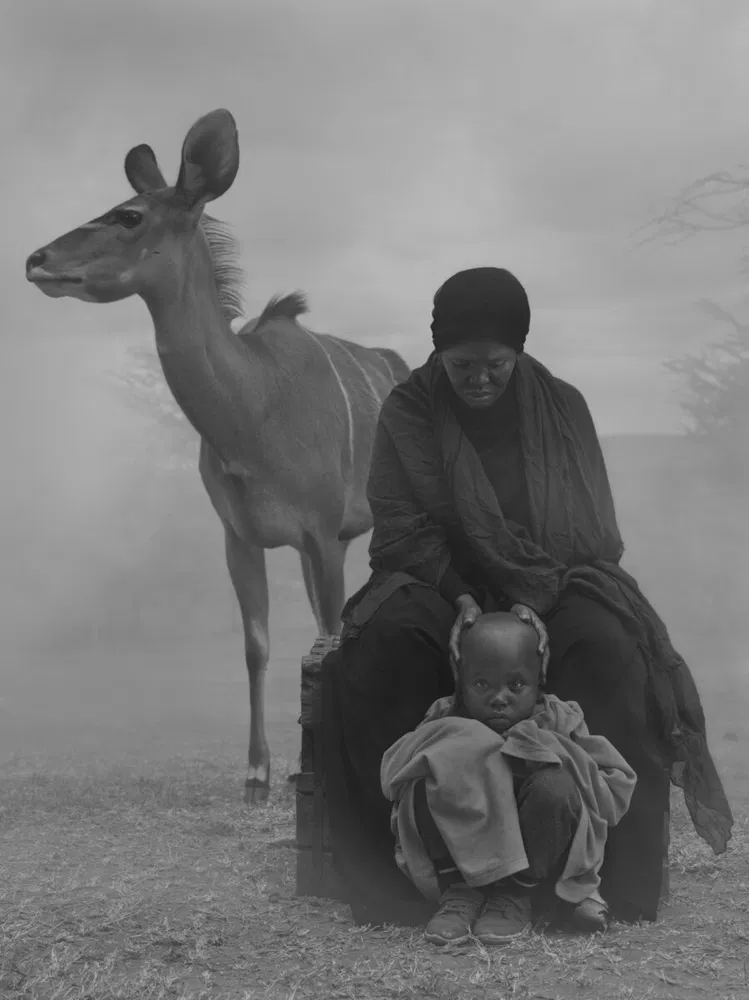
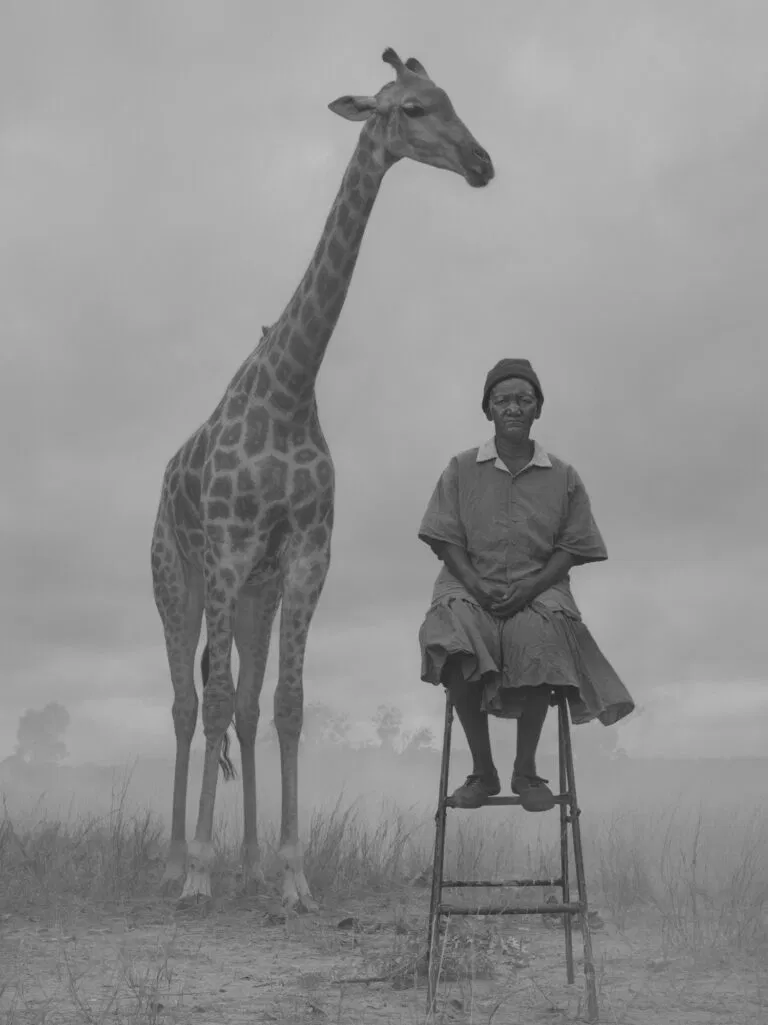
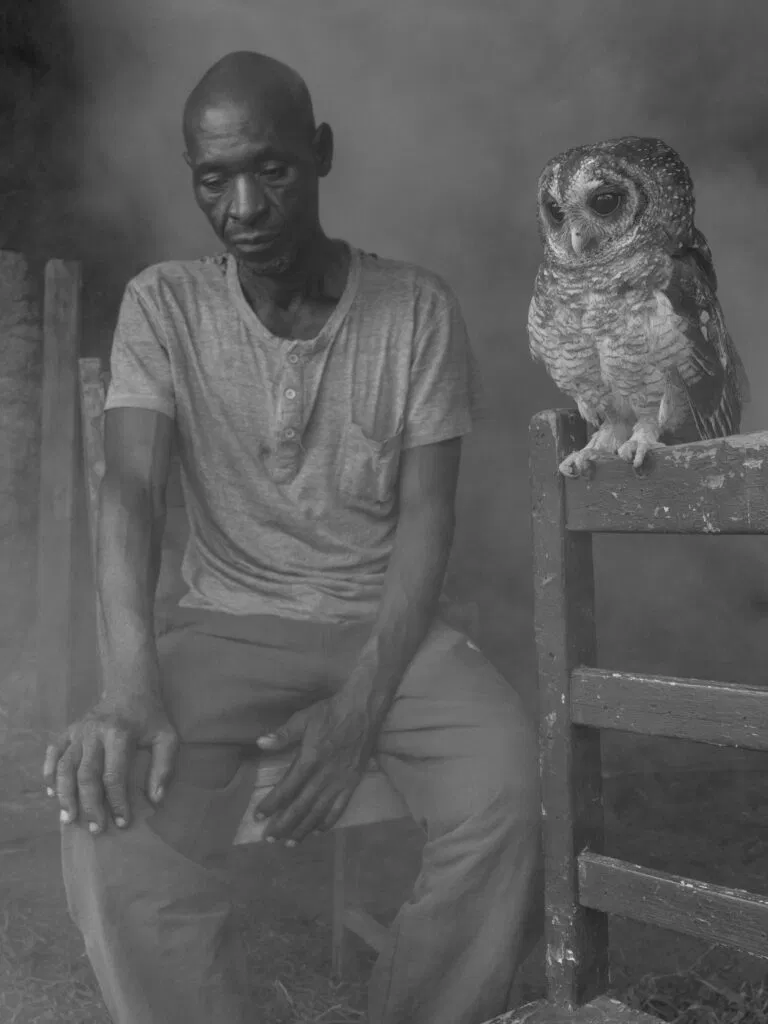
Striking, and powerful, accentuated by permeating fog that signifies smoke from the ever-intensifying wildfires which continue to devastate habitats across the globe, it is a project that in many ways, encapsulates his practice: humans and animals afforded the same dignity and respect, photographed with an artistry and sensitivity befitting of the subject. Though undoubtedly somber and poignant, simultaneously, these are images not devoid of hope, a message to us all, that it is not too late.
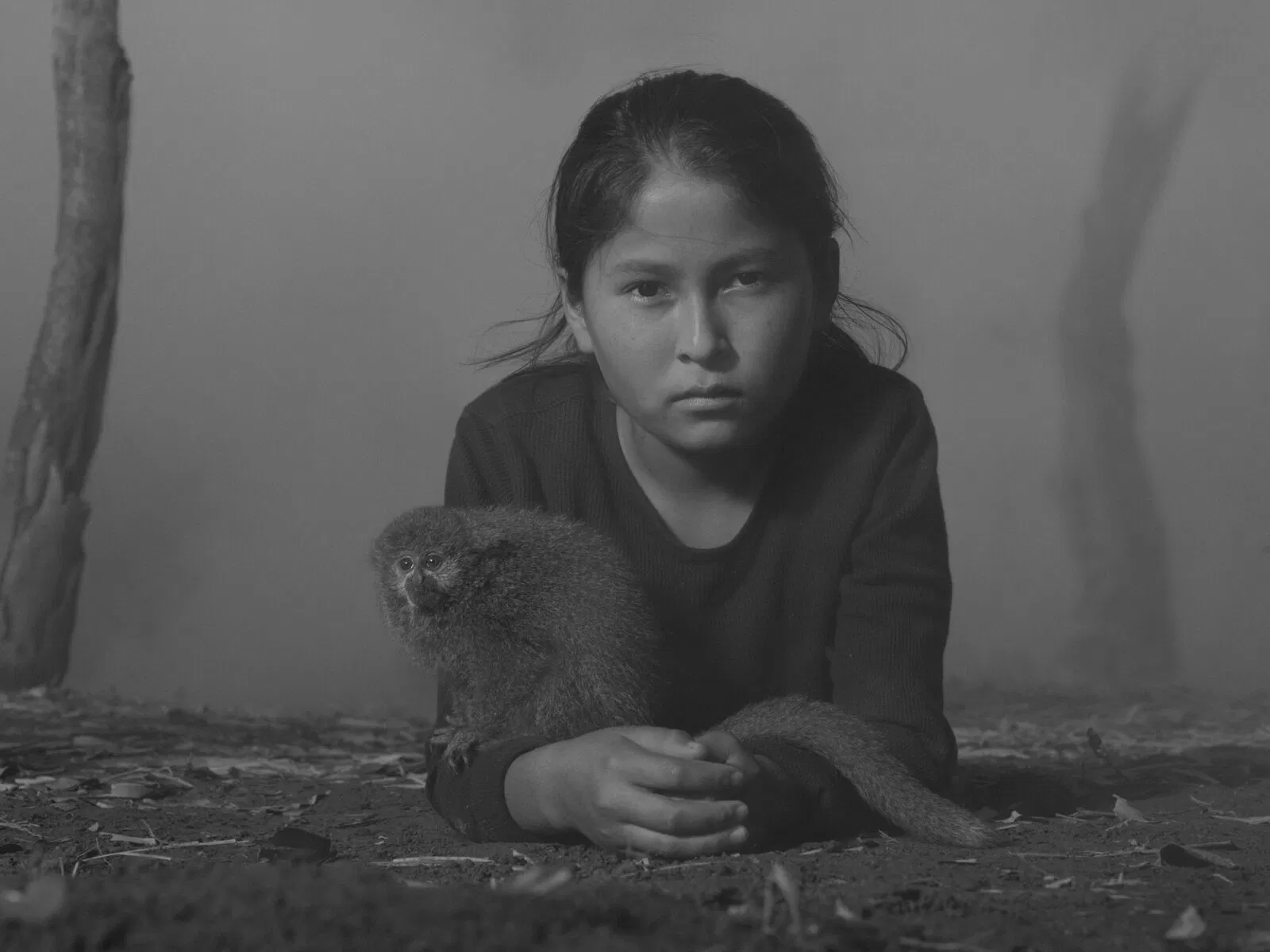
“I guess if there is one overriding message, it is that we need to be far better stewards of the earth. That we all need to learn to be good ancestors, considerate to not just those alive now, but all those still unborn, yet to be subjected to the impact of human behavior now.”
_____________________
所有图片版权所有 尼克·布兰特
The Day May Break, This Empty World, Inherit the Dust, Across the Ravaged Land, and On this Earth, A Shadow Falls, are available as monographs via his 网站.
Nick Brandt was judge of our Black & White Award in January 2023. You can view the results 这里。.