

“..Shoot less. Feel more…” — Jason M. Peterson
Our 2026 Black & White Award is now open for entries and will be judged by world-renowned Chicago-based artist Jason M. Peterson. One of the most recognisable voices in contemporary monochrome photography, Peterson has spent decades refining a visual language defined by bold geometry, stark tonal contrasts, and a visceral emotional edge.
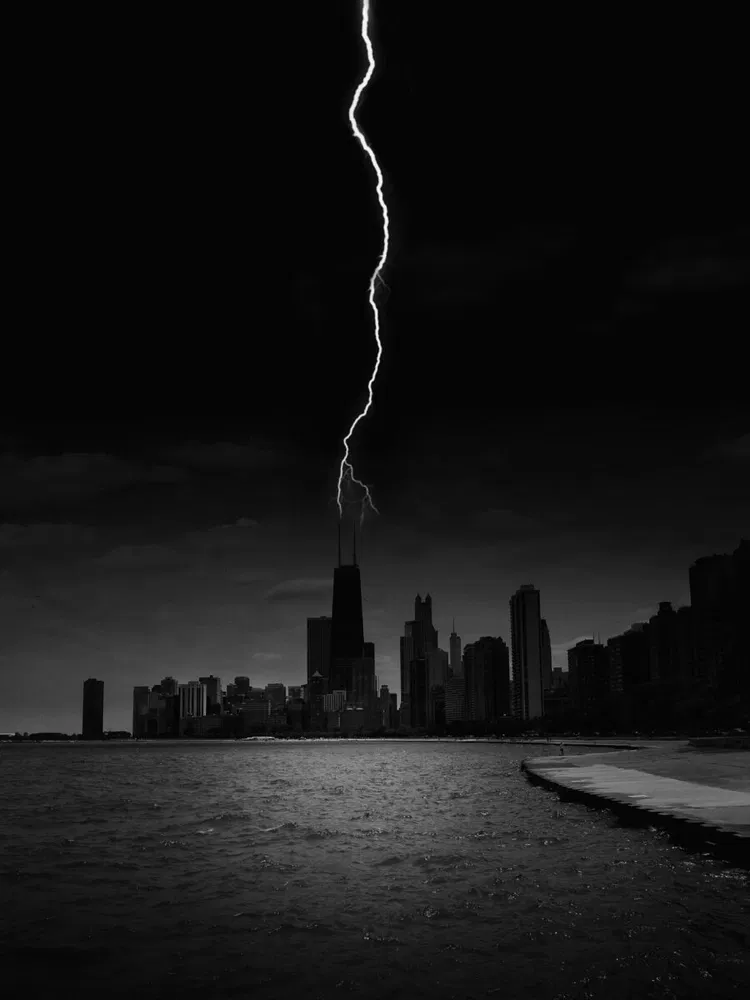
A single bolt of lightning slices down through the Chicago sky, striking the crown of a solitary tower with sharp, white intensity. The surrounding skyline sits in near-silhouette, the lake below shifting in muted grey. It’s a rare, charged moment — a collision of drama, scale, and contrast — and yet, through Peterson’s lens, the strike lands with such clarity and intent that it feels less like chance and more like a moment he was poised to catch.
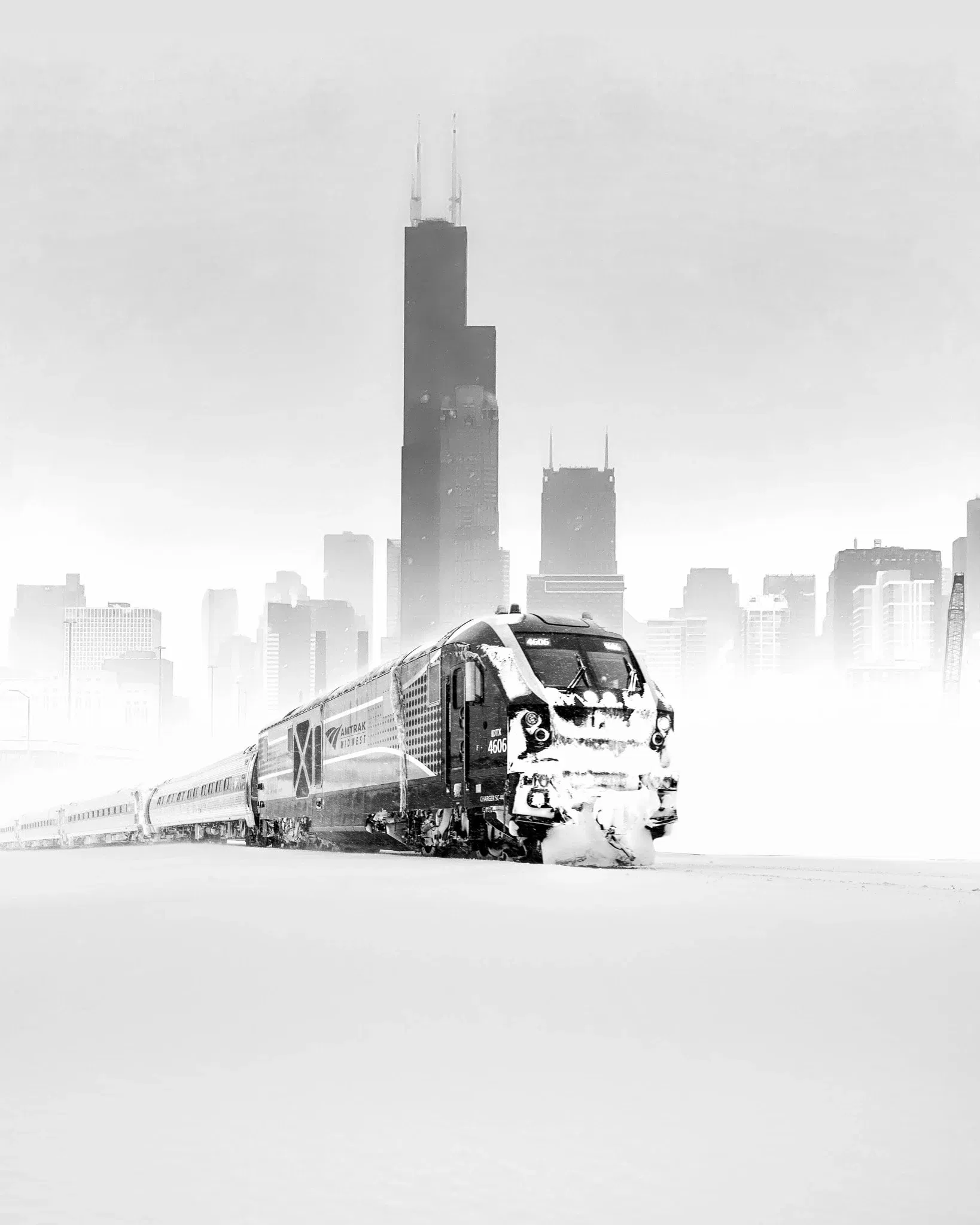
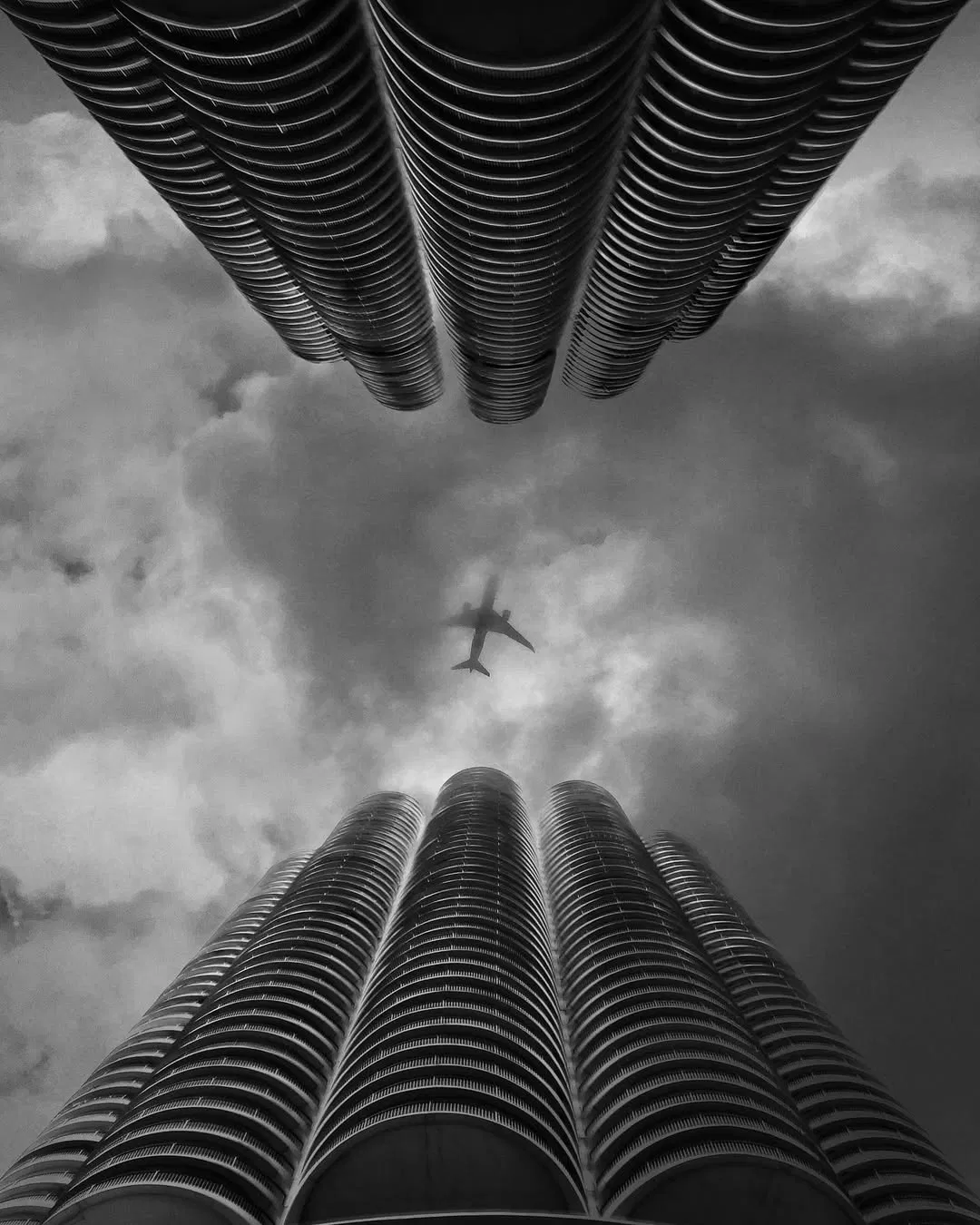
Though now recognized by millions across social platforms for his signature style of photographic art, his first steps in picking up a camera were influenced not by photographers, but by the independent spirit of American hardcore music.
He first picked up a camera in the 10th grade, drawn into the darkroom of his high school, where photography offered the same sense of autonomy he felt playing in DIY bands. “The independence drew me to photography,” he recalls, the possibility of creating something entirely on his own terms. Though he always approached the medium with seriousness, it wasn’t until the early days of Tumblr, Flickr, and later Instagram that his work began to find wide attention, marking the beginning of a trajectory that would ultimately make him one of the most exciting voices in black & white photography today.
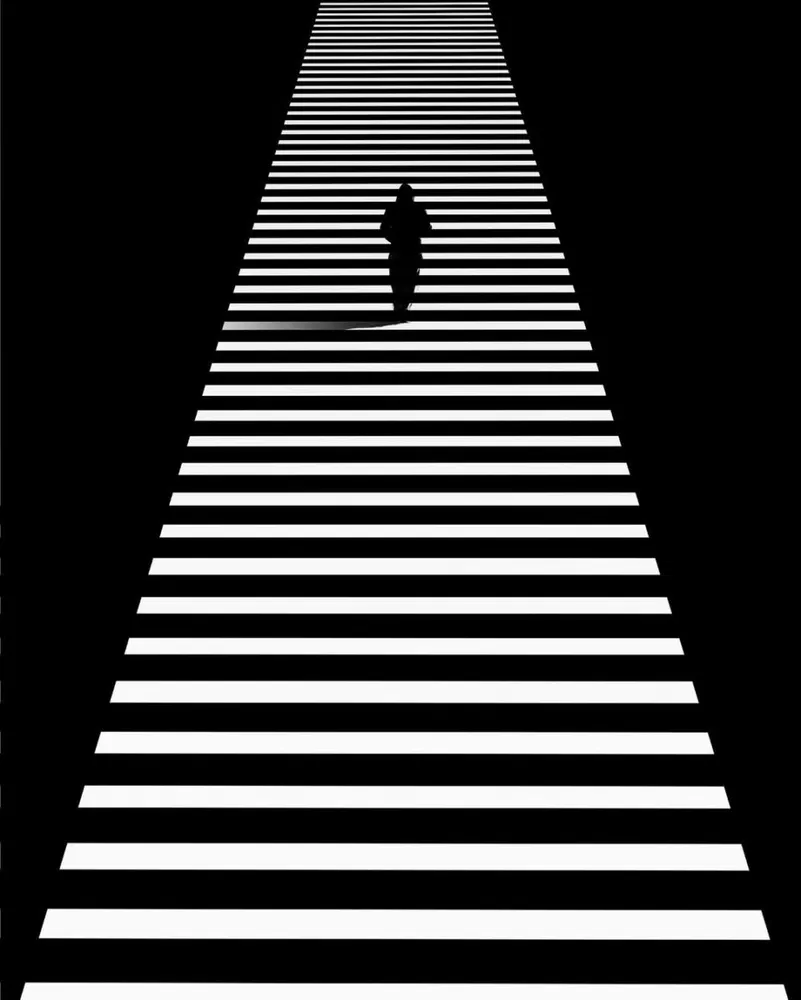
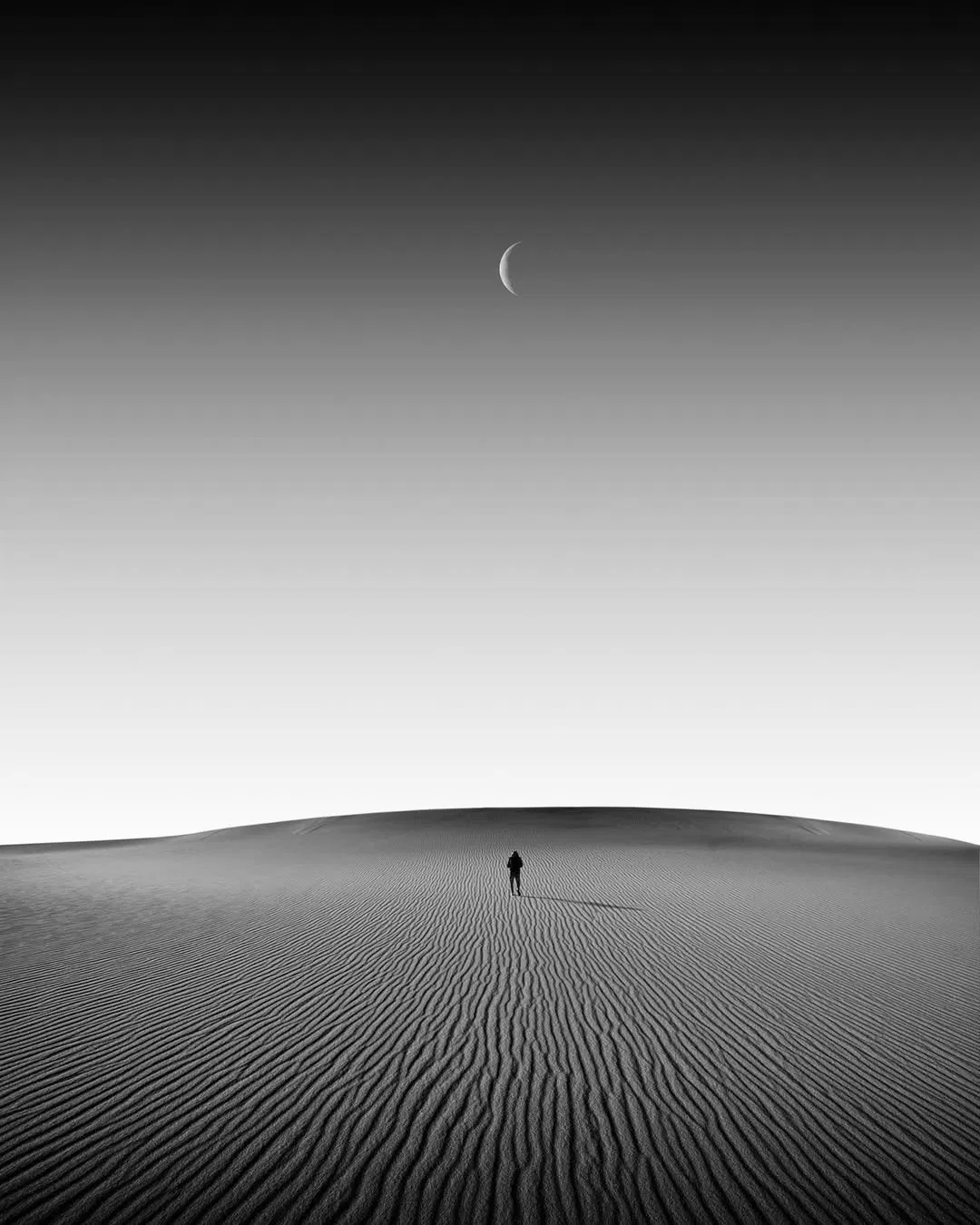
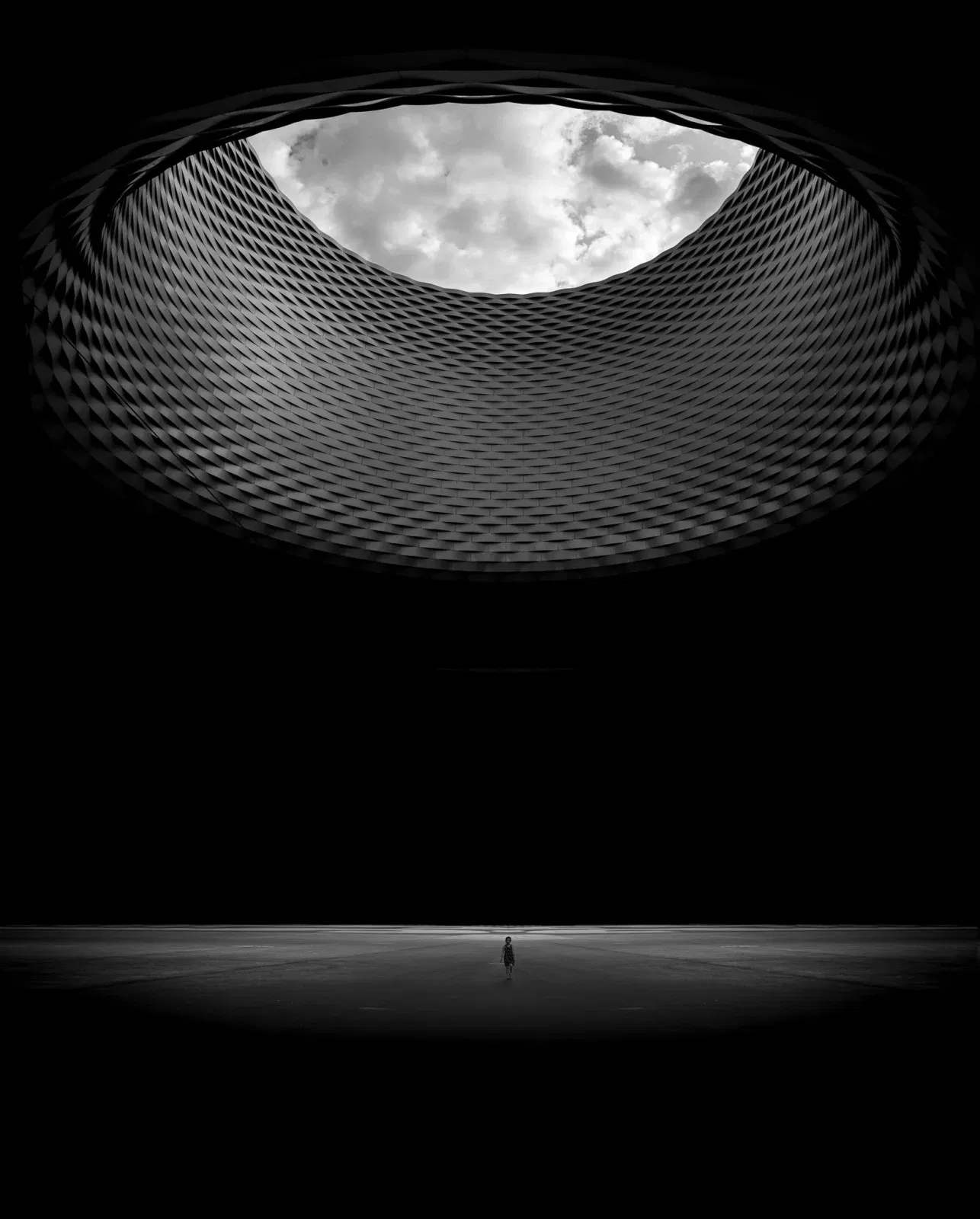
He continues to draw influence more from music than photography. Emotion, for him, is the first requirement of an image; if he doesn’t feel something while making it, he believes no one else will. Music provides the pathway into that state of absorption. Yet there is one photographer whose work left a profound mark early on: Harry Callahan. A single, typically understated image from the pioneering American photographer depicting an alleyway taken in 1950s Chicago has lingered with him for decades. An image whose quiet power, he admits, he has been trying to equal ever since.
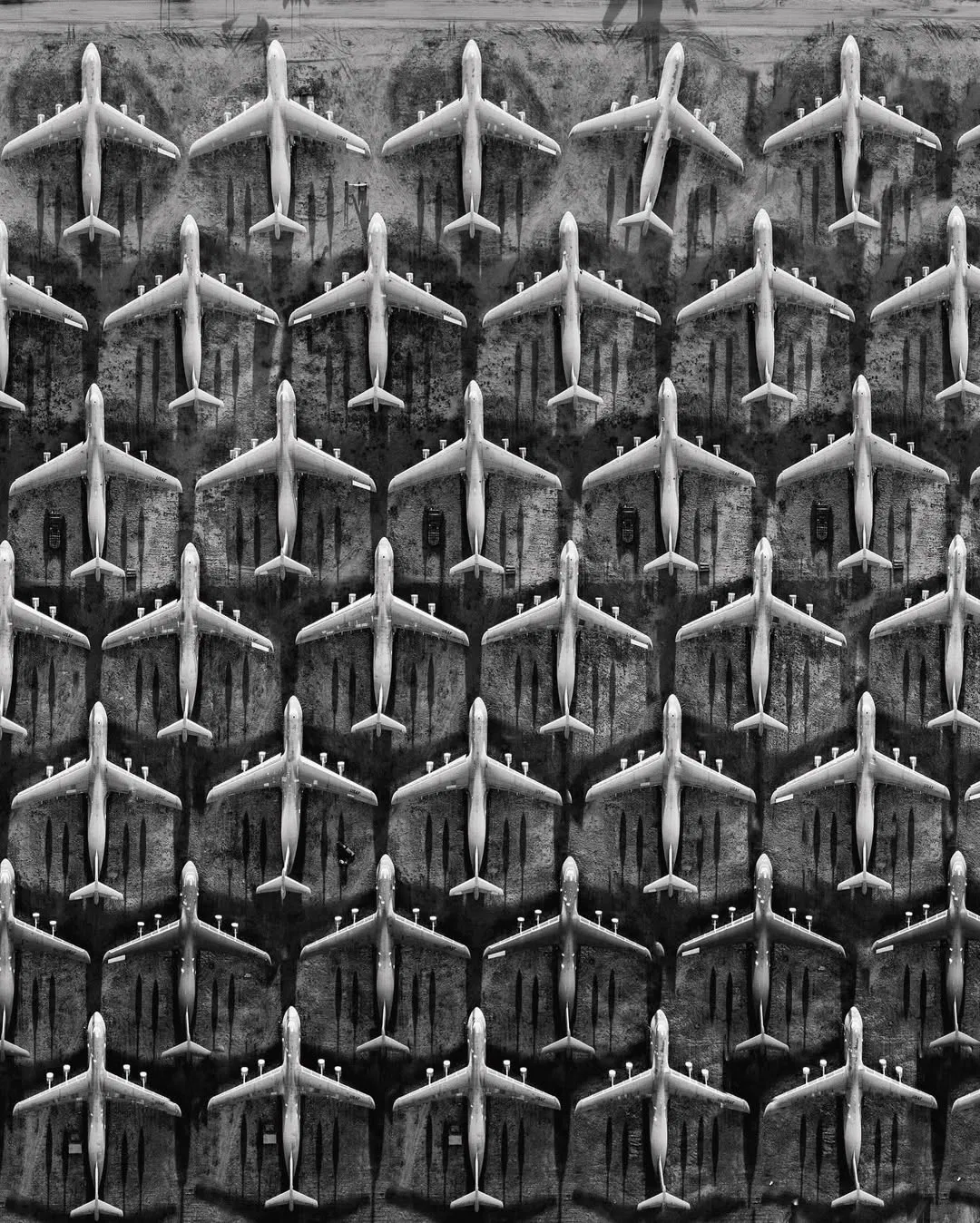
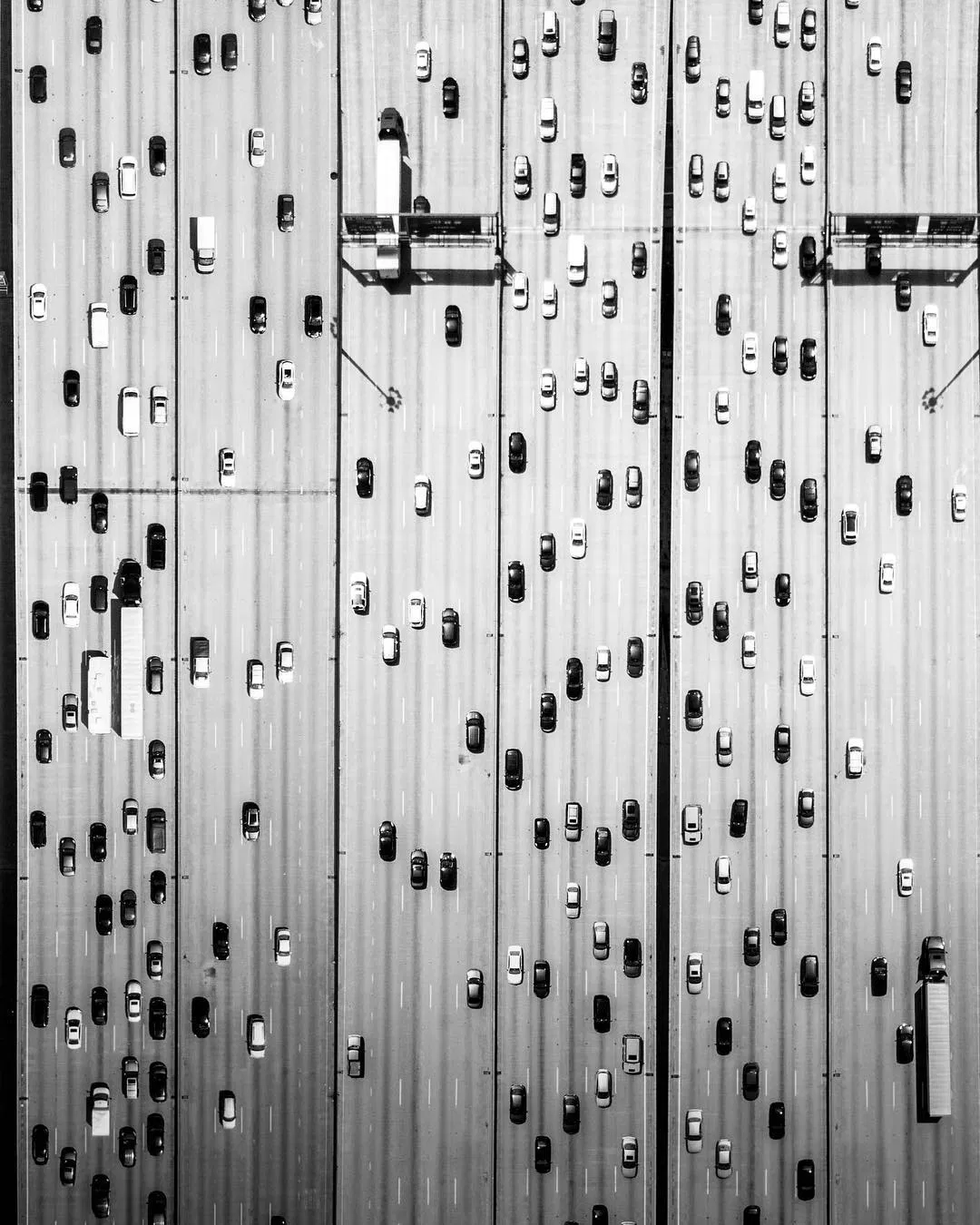
Peterson’s works almost exclusively in monochrome, a choice that is both practical and artistic. Color-blind since childhood, he never felt able to shoot or grade color, but he also rejects the notion of black and white as a nostalgic or reductive aesthetic, instead, seeing his work as a balance of the graphic and the photographic, a distillation of form, light, and emotion. The absence of color is not a limitation but a clarity, a way of stripping an image back to its essential parts.
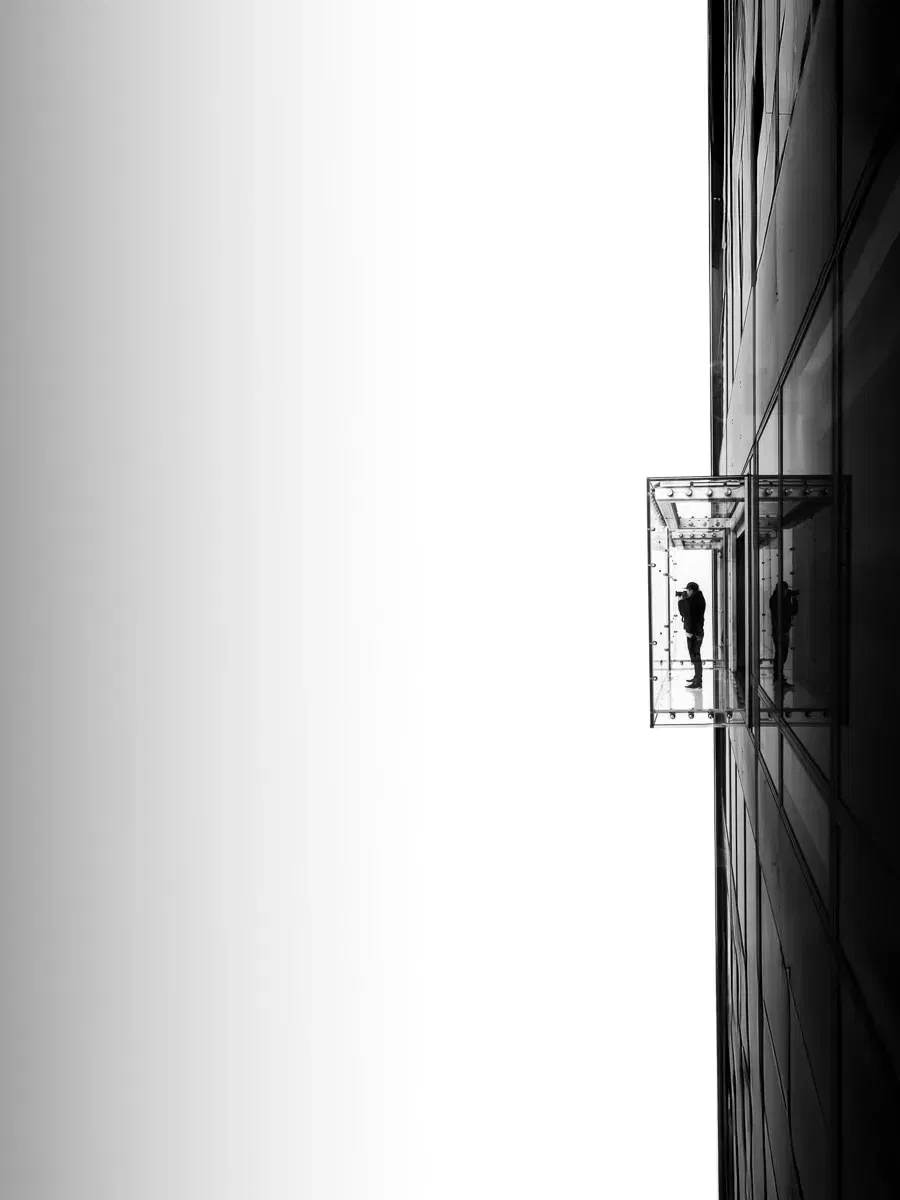
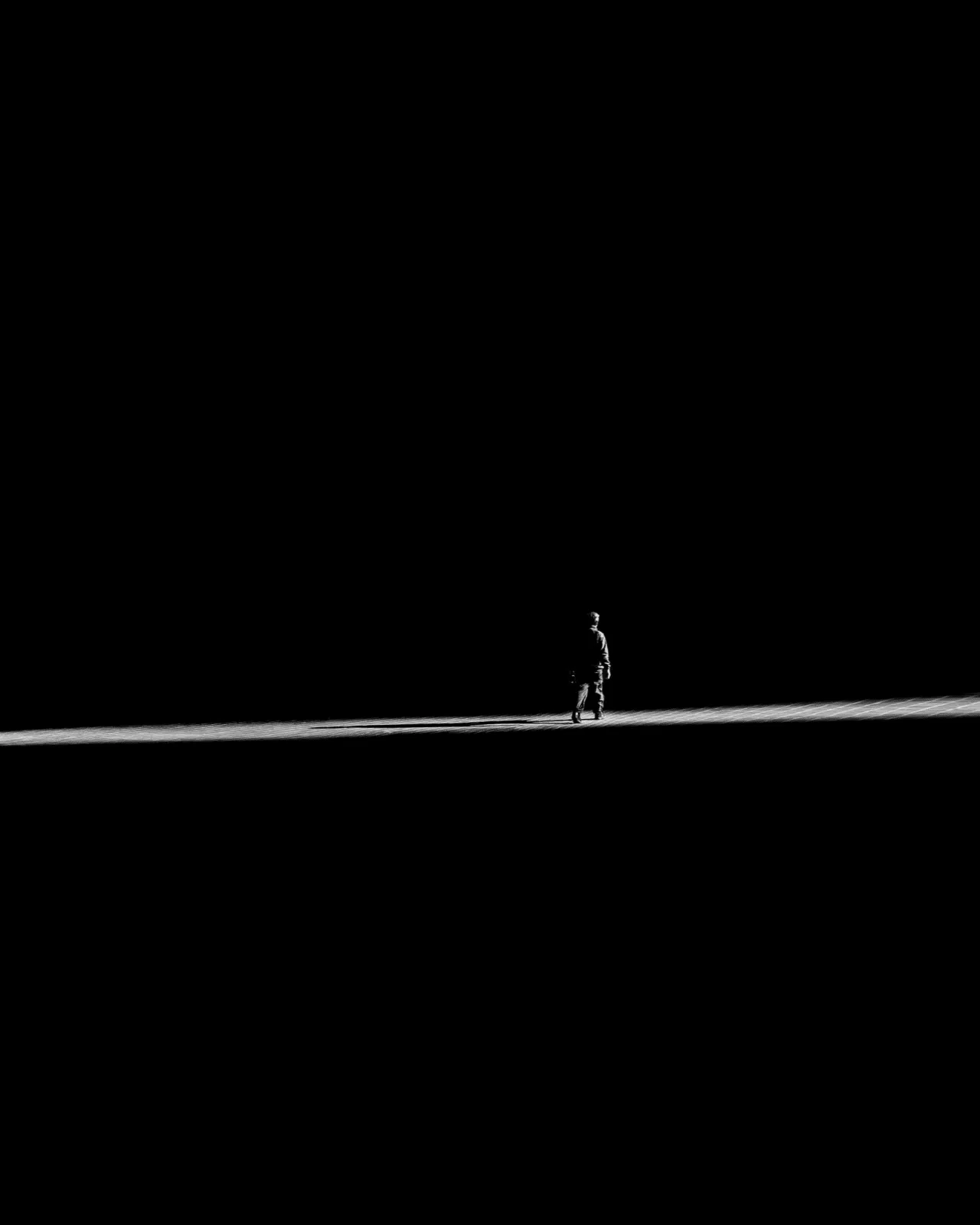
Despite the precision of his compositions, his process is instinctive. He shoots with whatever is in his hands—phones, drones, whatever he is carrying—driven by an immediate pull toward a structure, a beam of light, a scene he cannot walk away from. “I go into a mode where I can’t move or think about anything else until I shoot it,” he explains. One camera does remain constant, however: the Leica Q2 Monochrom, a tool he carries everywhere.
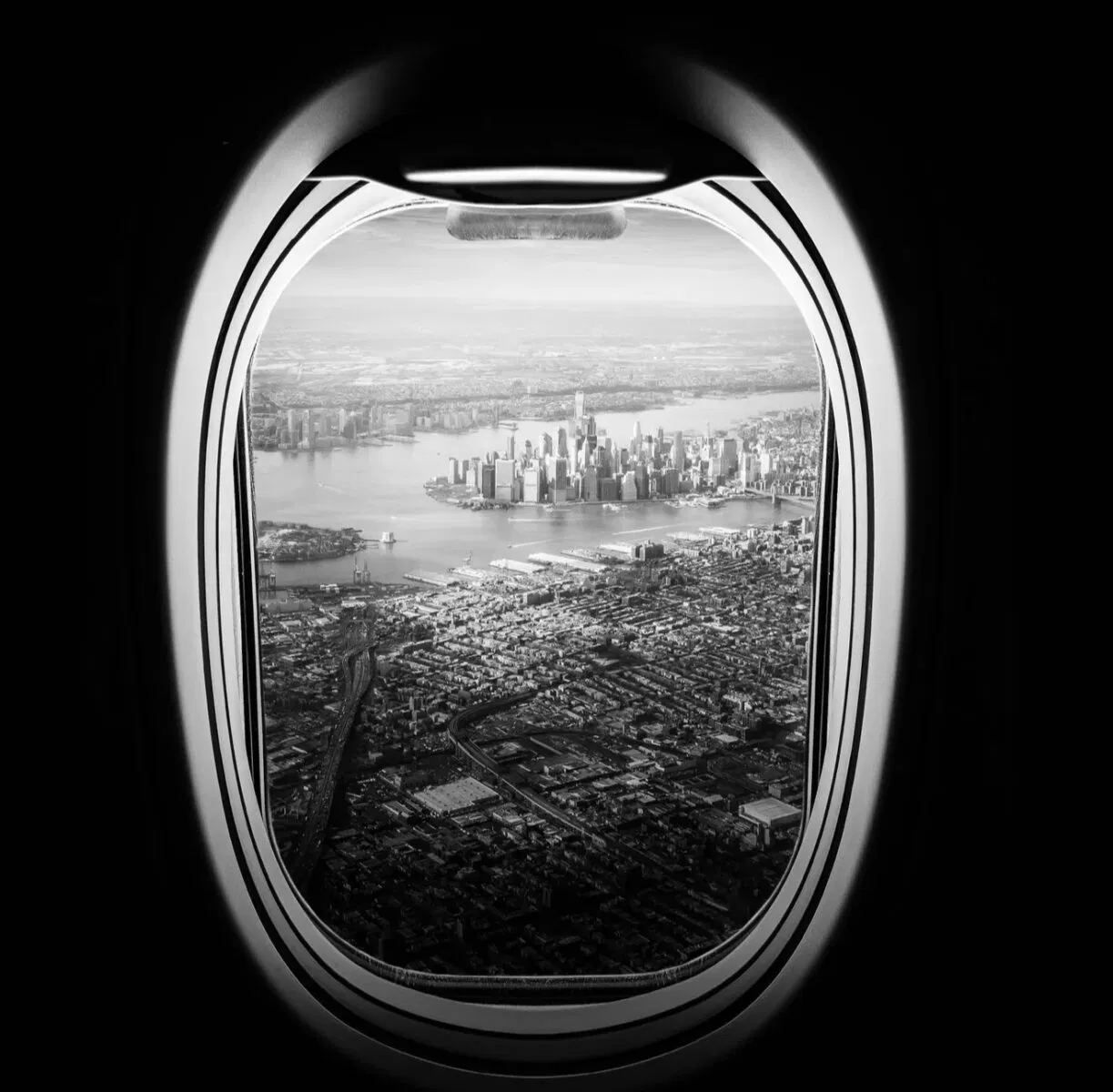
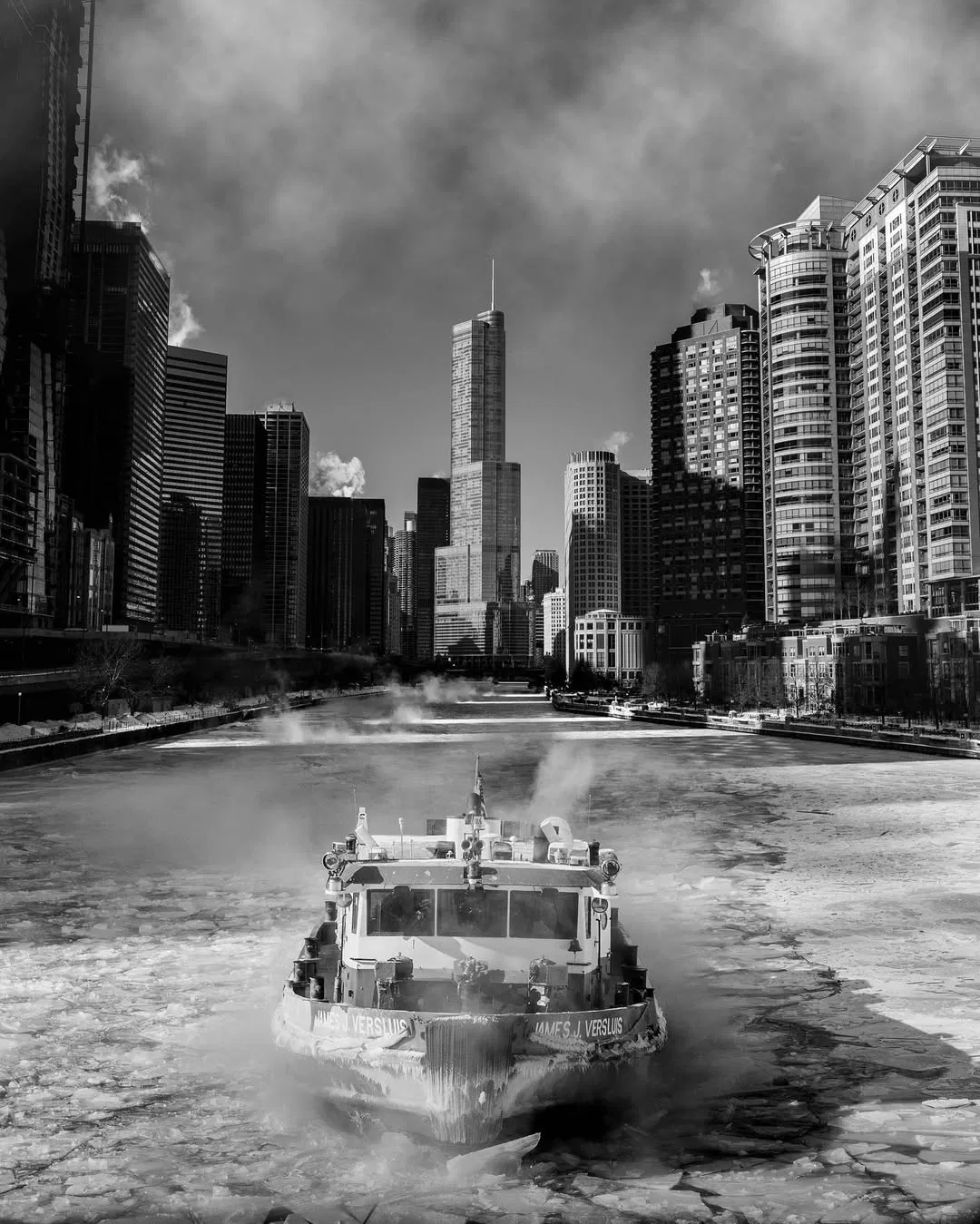
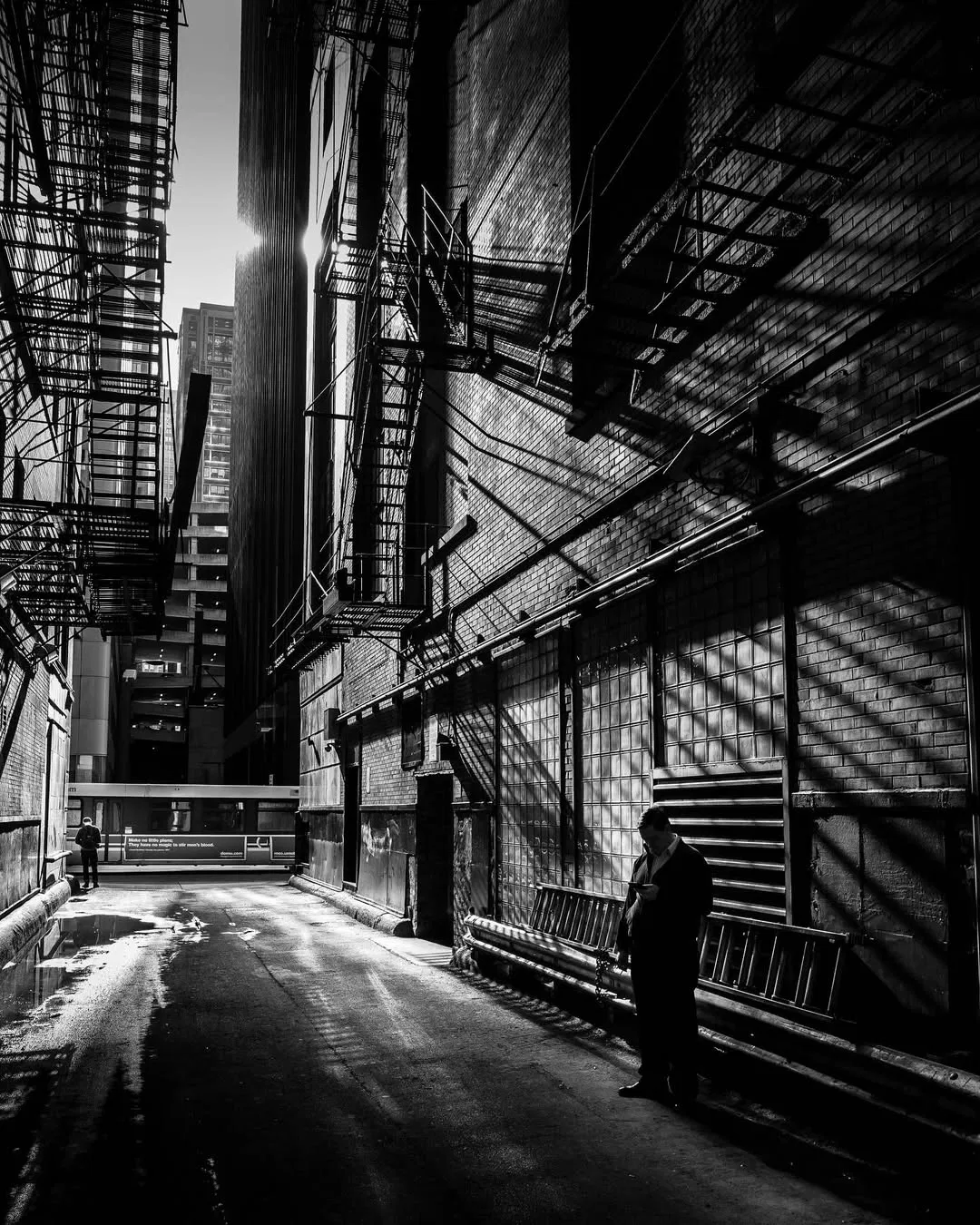
His mastery of the monochrome palette made him an obvious choice for our Black & White Award. Though he brings to the role the same sensibility that defines his own work, (he says he will first and foremost be looking for emotional resonance: if an image moves him, it succeeds), he also mentions that he’s often most drawn to work that diverges from his own style, intrigued by photographs that open up possibilities beyond the visual language he has spent decades refining.
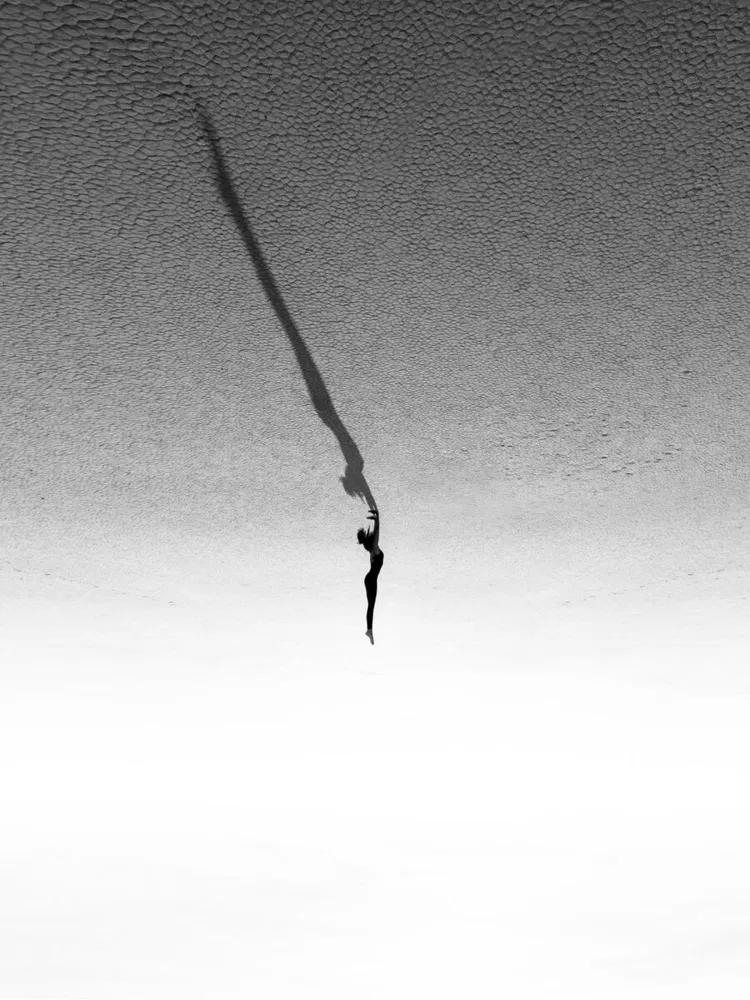
His focus on emotional resonance and openness to unexpected approaches isn’t just a criterion for judging, it’s a principle that guides his own work and informs the advice he offers to emerging photographers: ‘Shoot less. Feel more. Find your own voice.’ This guidance reflects his evolution, shaped by intuition rather than trends, and by an enduring belief in the power of a singular, honest perspective.
All images © Jason M. Peterson