

“Home of the Perpetually Lost”, by Vedad Divovic, explores the fragile idea of home, both as a physical place and as a feeling of security and belonging, and what happens when that sense of home is lost.
In Lebanon, a country shaped by migration and displacement, home can mean many different things. For those who have been forced to leave their homes, it has become a place of arrival, while economic and political instability has also pushed many of its own residents to leave.
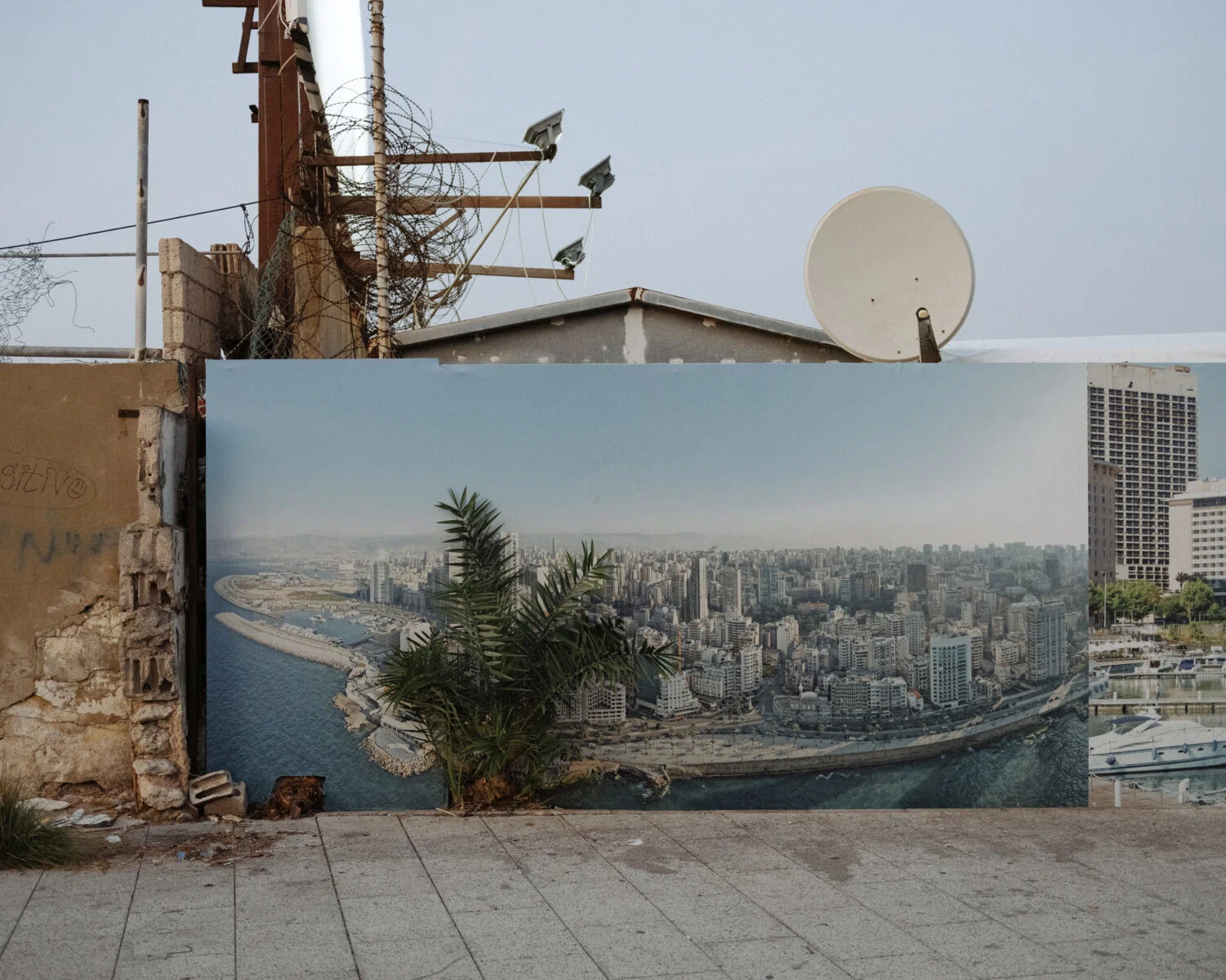
Against this backdrop, Divovic looks at the longing, loss, and uncertainty that can accompany the search for somewhere to belong, in a place where the boundaries between arrival and departure, belonging and displacement, are often blurred.


V. Divovic: I grew up in Sarajevo, moved to Germany because of the war, came back, and later moved to Germany again to study photography. Especially as I have been getting older, the idea of home has become a more and more important topic for me. Identity, belonging, and home are subjects that keep repeating themselves throughout my work.
Usually, when I start a project, I research a topic and try to find the place where I can explore it. I go there, spend time there, photograph, and see what develops. With this project, I went to Beirut without really knowing what would happen. I wanted to see what would emerge if I simply started photographing.


V. Divovic: After my first trip, along with the research I had done and what I knew at the time about Lebanon, the idea of home became the central subject of the work. One of the initial reasons was that Lebanon somehow felt like Sarajevo to me. There was something about the place that felt strangely familiar.
Actually, the first time I landed in Beirut, I had this very strange feeling that I already knew the place, even though I had never been there before. It felt almost as if I had lived there in another life. I know that sounds a little strange, but that was genuinely my first feeling when I arrived. That sense of familiarity was one of the first things that made me start thinking about home.

V. Divovic: I met people from very different backgrounds. Some were born in Lebanon, some had arrived there from somewhere else, and some were preparing to leave. I was interested in these very different relationships to the same place. There was never one way of approaching people. Sometimes I spent an entire day with someone, sometimes I only knew them for a minute, and sometimes I had known them for months before photographing them.


V. Divovic: But the encounters were always very honest, at least that is how I experienced them. I did not specifically look for people who told me that they had a complicated relationship with home. Instead, I tried to find people who somehow represented this feeling to me, people where I sensed something about it when I met them, spoke to them, or spent time with them.

I was also interested in places and objects, not only people. I was looking for small traces of people rather than trying to explain their lives. A repaired chair, for example, can carry a history without telling you exactly what happened to it. In that sense, the objects became metaphors for people. They can be damaged, repaired, displaced, changed, but still somehow continue to function. There is a sense throughout the work of people searching for something that may be difficult or impossible to find.


V. Divovic: I don’t know how many people can relate to the work in exactly the same way, especially people who have not experienced difficulties around home, displacement, security, or belonging. But perhaps that difference is also important. If someone who has experienced these things can recognise something of themselves in the work, that means a lot to me. But if someone who has never had to question where they belong sees the work and starts thinking about how easily we take home, security, and safety for granted, that would also be meaningful.

V. Divovic: Maybe the photographs can make someone think about a place they have left, a place they miss, or simply a place they have always considered home without ever having to question it. I don’t expect the work to give answers. I think I was searching for answers myself while making it, and I didn’t really find them. I would rather leave the viewer with that uncertainty and with their own questions about what home means to them.
All images © Vedad Divovic