

A photography portfolio is more than a place to display your best images. A beautiful image can make someone pause, but a strong portfolio invites them to dig deeper. It creates rhythm. It gives the viewer a sense of who you are, what you notice, and how your images belong together.
That is why building a professional photography portfolio should begin with one simple question: What do you want people to feel when they see your work?
A strong first image is essential. It sets the tone before the viewer reads a bio, opens a project, or clicks through the rest of the gallery. In Claire Voss’s portfolio, the dark visual setting gives her images an immediate editorial presence. The design stays quiet, while the photography carries the atmosphere:
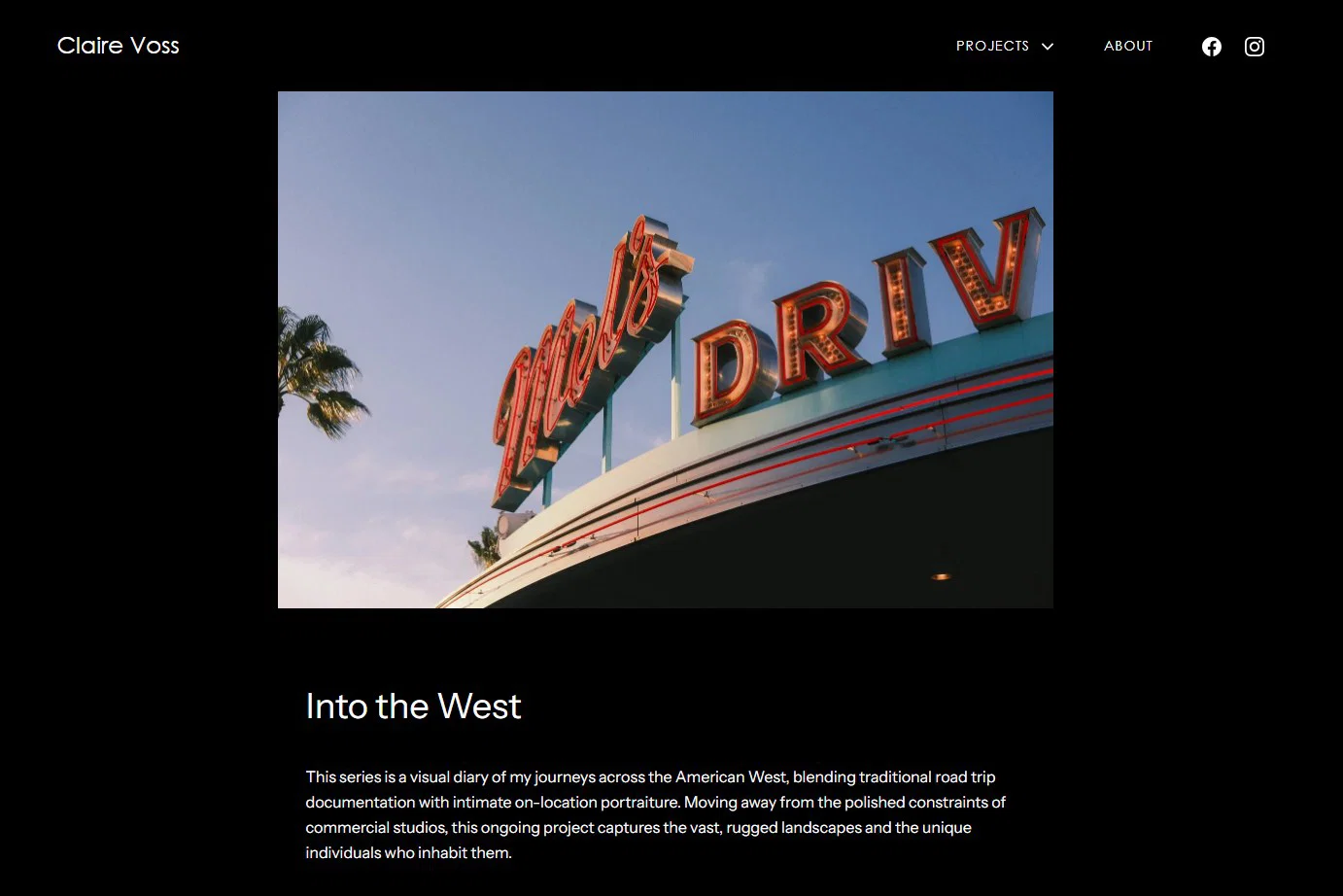
Marco Contini’s portfolio works differently. His travel, street, and landscape photography benefits from a lighter, more open presentation. The images suggest movement, place, and encounter, creating the feeling of a journey rather than a static gallery.
Both approaches show the same principle: your portfolio design should support the work, not compete with it.

Sequencing is just as important as image selection. A portfolio does not need to show everything. In fact, it usually becomes stronger when it shows less. Think about contrast: wide shots and close details, quiet images and energetic ones, portraits and places, pauses and moments of tension.
The truth is, the best photography portfolios are about more than just a collection of good pictures.
Text and captions can add value, but only when they offer something meaningful. A title, a location, or a brief note can provide vital context, particularly within documentary, editorial, or fine art photography. Yet, words should never overwhelm the image. They should be available when needed, invisible when not.

For photographers building a portfolio website, projects are another important tool. A single gallery can show range, but projects show depth. They help viewers understand different series and bodies of work, while also making the portfolio easier to navigate.
And of course, everything must work beautifully on mobile. Many viewers will first open your portfolio from Instagram, an email, a competition page, or a search result. If the images feel too small, the navigation is confusing, or the text pushes the work away, the experience loses impact.

That is why The Independent Photographer created a portfolio builder designed specifically for photographers: simple, responsive, and focused entirely on the images. No coding, no complicated setup, and no unnecessary clutter.
The platform includes photography-first layouts such as full-bleed, grid, and slideshow, with mobile-optimized pages, SSL security, social integration, custom homepage layouts, and project-based organization. There is a free basic plan, while premium plans currently start at just $5/month!

Whether you are building your first online photography portfolio or refining an existing one, the goal is the same: let the work speak clearly. A strong portfolio doesn’t attempt to explain everything. It needs to guide the viewer through the images with confidence, rhythm, and restraint.
Explore live portfolio examples by Claire Voss and Marco Contini, or discover The Independent Photographer’s portfolio website builder.