

MACK publisher presents The Western Edge, the second volume in Mark Ruwedel’s long-term photographic examination of Los Angeles and its shifting ecologies.
Mark Ruwedel’s The Western Edge opens with a line from Frank Fenton’s 1942 novel A Place in the Sun. Fenton’s story, set along the California coast, follows a young man who arrives seeking renewal only to confront instability, disappointment, and the fragile edge of the American dream, a vision of the West poised between hope and collapse.
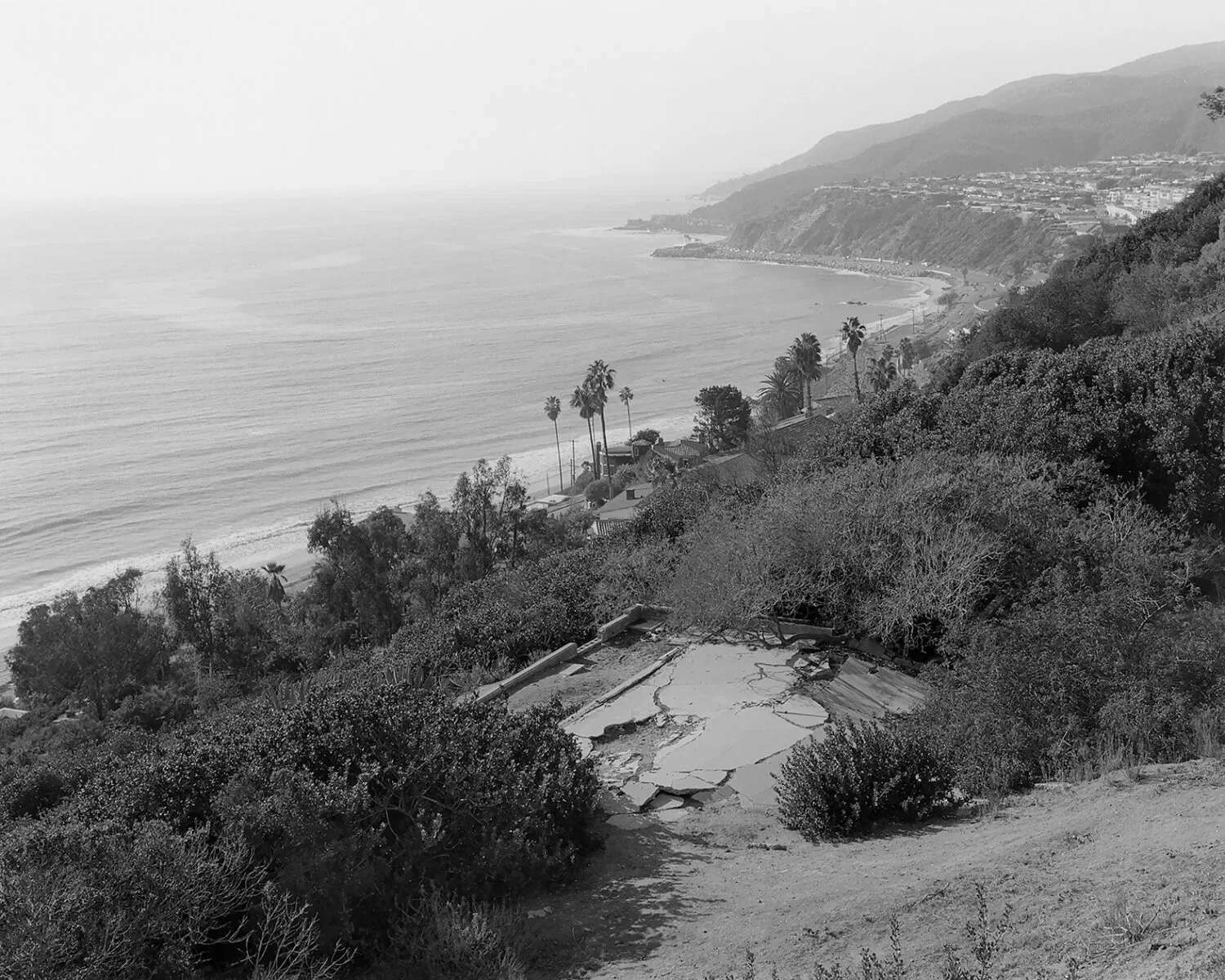
It is a haunting invocation of a place defined by endings, and an apt prelude to a body of work that traces the final boundary of the continent, where the land fractures, buckles, and slips toward the Pacific, and where the mythology of the American West seems to dissolve into salt, dust, and light.
Ruwedel has long chronicled the scars of North America — abandoned rail lines, bomb craters, failed homesteads — and here, too, the landscape is marked by rupture. Cracked asphalt, collapsed retaining walls, derelict fences, and fractured slabs of concrete recur like refrains, remnants of ambition undone by time and shifting earth.
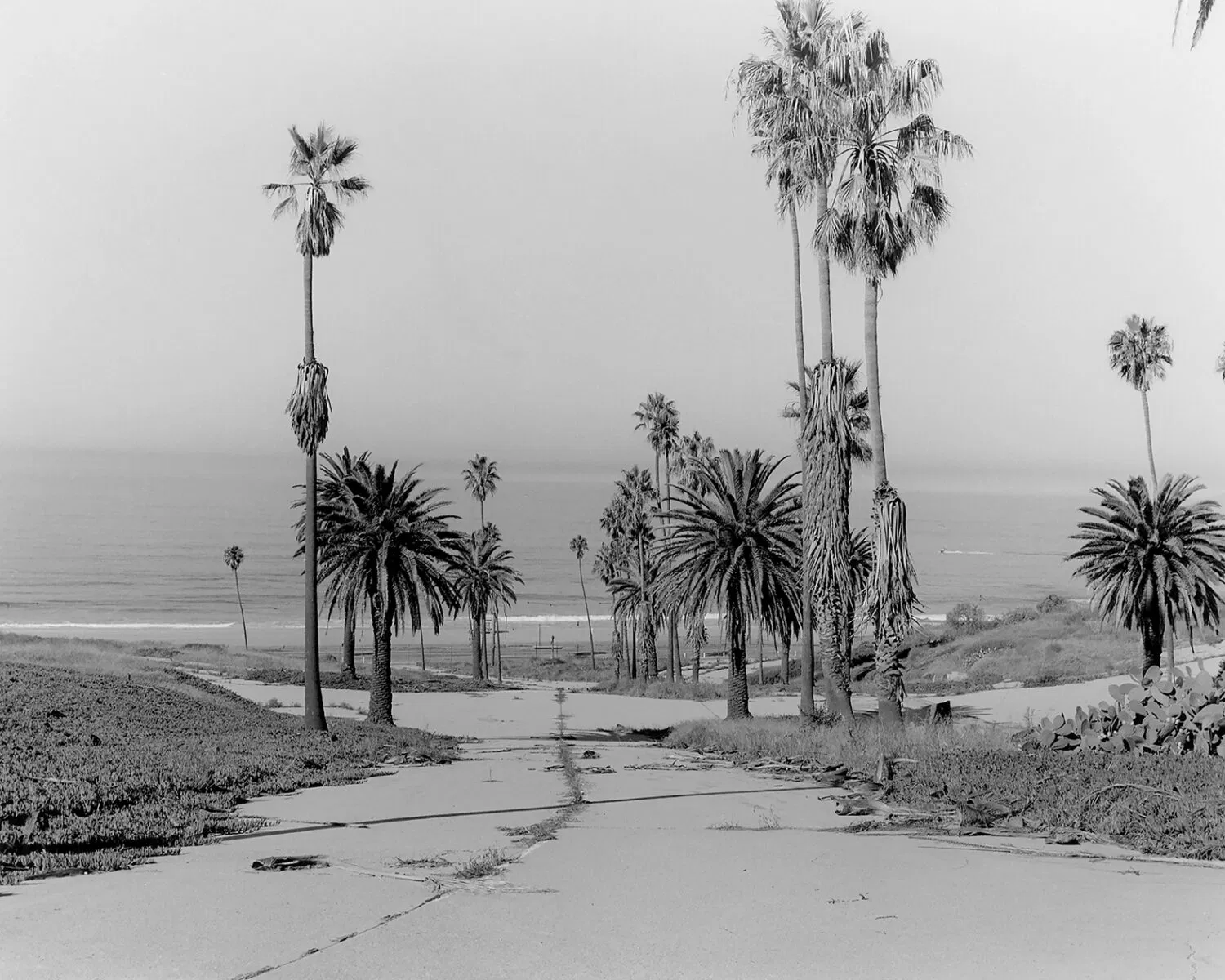
Malibu mansions cling precariously to unstable cliffs, their foundations eroded and their immaculate facades surrounded by crisp, desiccated foliage. These images feel like metaphors for a broader American empire: glittering symbols built on fragile ground, slowly tilting toward oblivion.
Throughout the book, nature and culture are inseparable. Landslides expose the skeletons of former neighbourhoods; dunes survive only because airport expansion rendered them uninhabitable; eucalyptus trees planted a century ago now wither in saltwater.
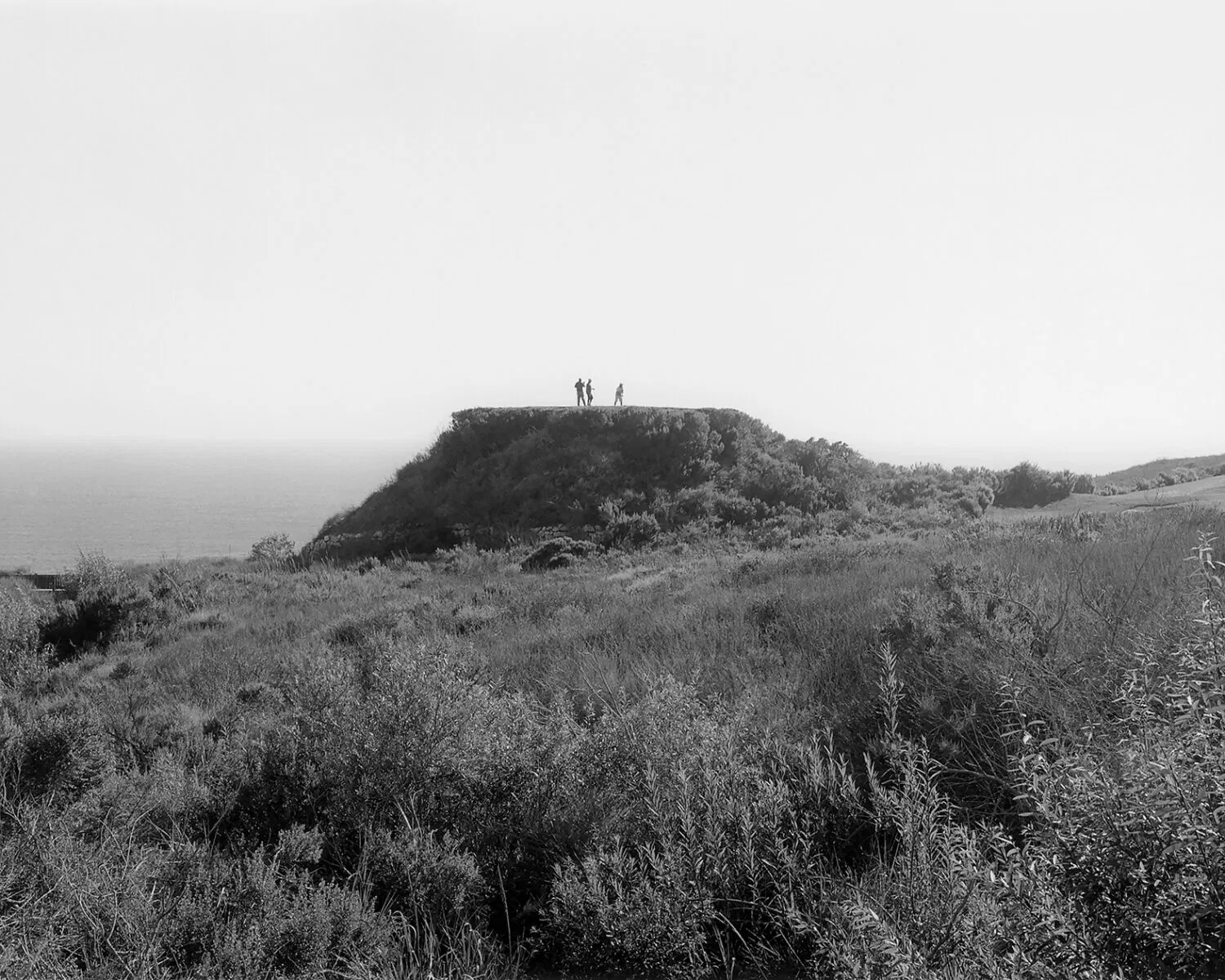
As fires, storms, and rising seas redraw the map of Southern California, the book reads as both document and warning. And so we return to the opening line — that crust of earth at the edge of a sea that ended a world. In Ruwedel’s hands, the western edge is not merely geographic but existential: the point where a centuries-old narrative falters, and where we are left to reckon with what remains.
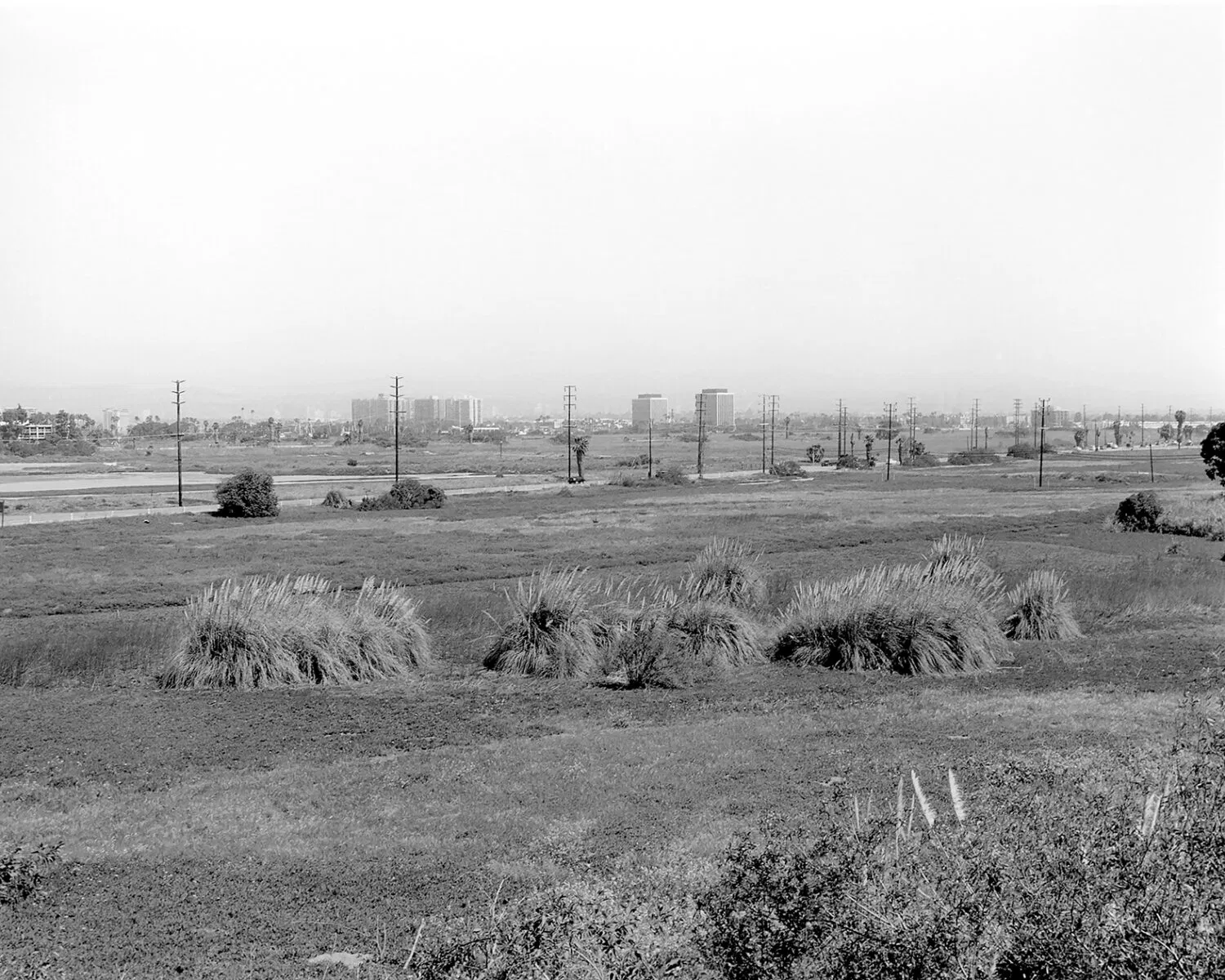
Throughout the book, nature and culture are inseparable. Landslides expose the skeletons of former neighbourhoods; dunes survive only because airport expansion rendered them uninhabitable; eucalyptus trees planted a century ago now wither in saltwater. Everything feels in motion: slipping, collapsing, shifting westward, pulled toward the sea. In one unforgettable photograph, a cluster of dry, wind-bent trees leans toward the ocean, their forms echoing the historical “westward pull” embedded in American imagination. Here, though, that pull leads not to opportunity but to disappearance.
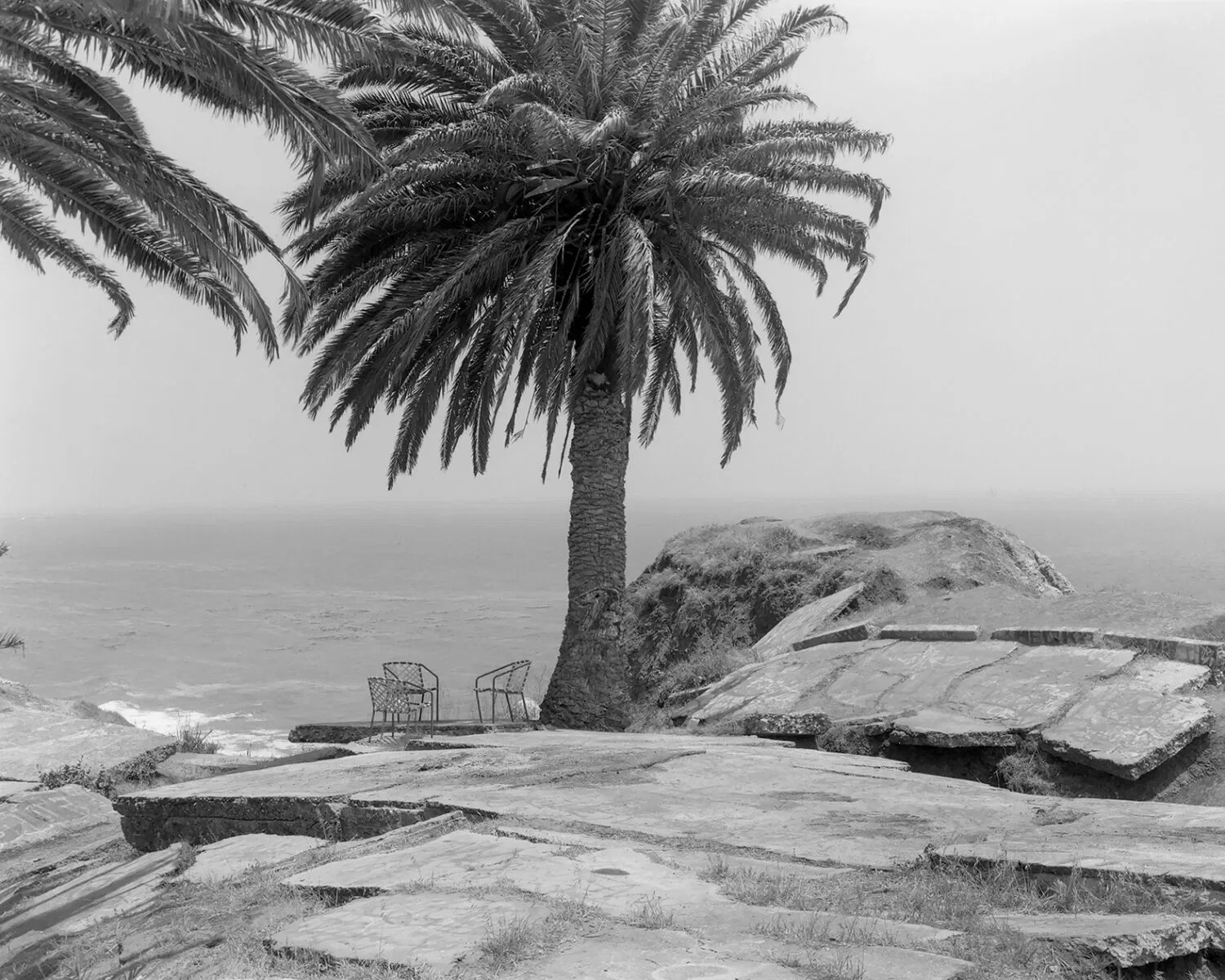
Published by MACK in a beautifully produced embossed hardcover, The Western Edge feels both archival and urgent, the second volume in Ruwedel’s larger project Los Angeles: Landscapes of Four Ecologies, which honours the traditions of large-format Western photography while speaking directly to the accelerating crises of the present. Ruwedel’s images are lucid, unsentimental, and quietly devastating. What emerges is a portrait of a coastline caught between myth and entropy, where the idea of the West reaches its inevitable limit.
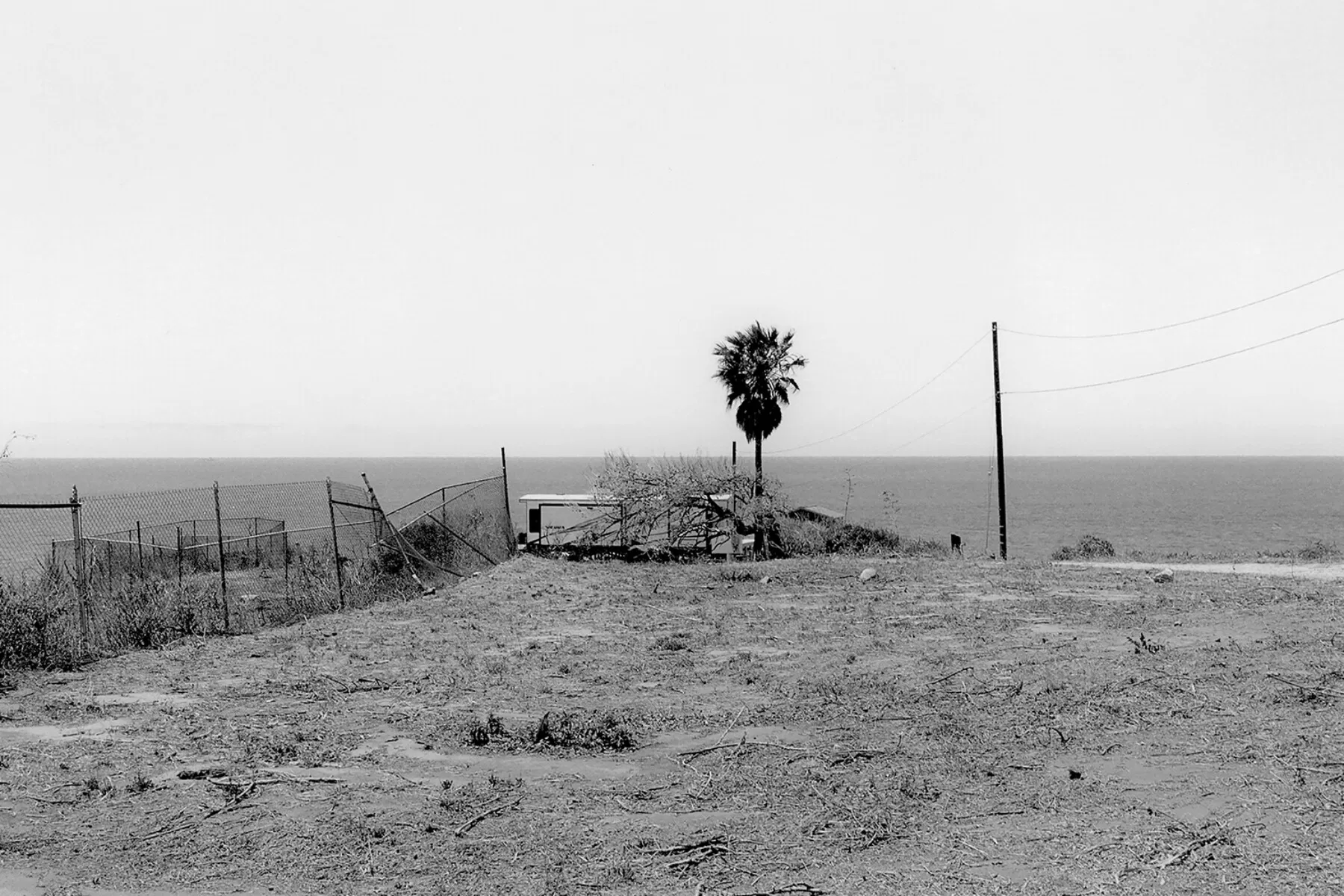
As fires, storms, and rising seas redraw the map of Southern California, the book reads as both document and warning. And so we return to the opening line — that crust of earth at the edge of a sea that ended a world. In Ruwedel’s hands, the western edge is not merely geographic but existential: the point where a centuries-old narrative falters, and where we are left to reckon with what remains.
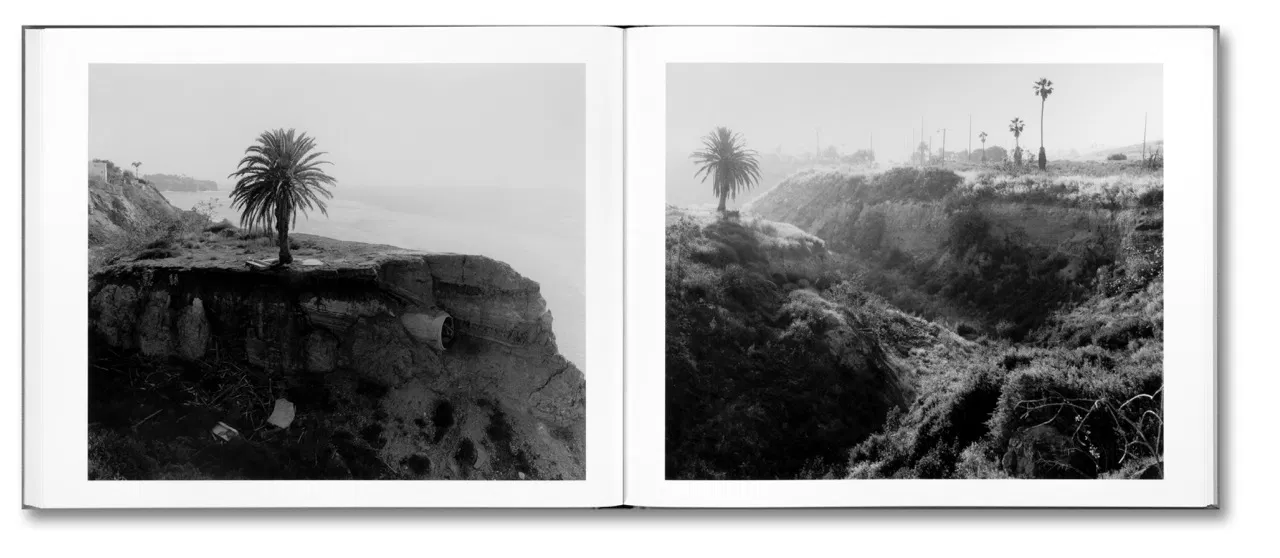
The Western Edge is published by MACK and is available here.
All images © Mark Ruwedel, courtesy of the artist and MACK