

Peru is a country of staggering contrasts, where ancient civilizations and living traditions endure beneath some of the world’s most dramatic landscapes.
From the high-altitude shores of Lake Titicaca to the dense, breathing expanse of the Amazon, and from colonial plazas to remote Andean villages, Peru’s identity is shaped by geography as much as by history. It is a nation where Indigenous heritage remains deeply embedded in daily life, where ritual and routine intertwine, and where community continues to anchor existence against incredible natural backdrops. For photographers, it offers both spectacle and history, though perhaps more importantly, culture enduring across time and place.
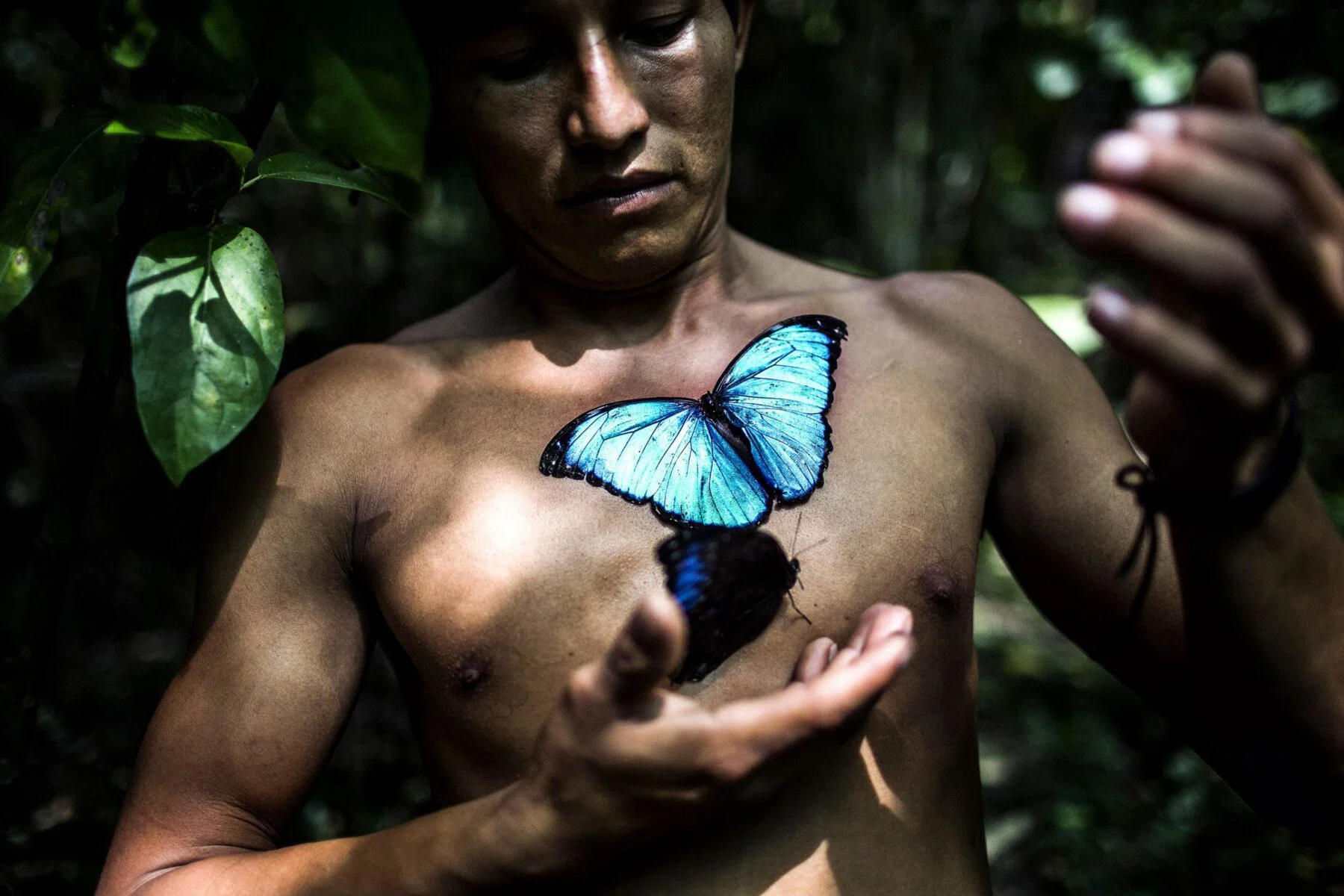
1. “AmA” – Javier Arcenillas
In the north of Peru, in the hidden heart of the Amazon, human life and the natural world meet in quiet, almost spiritual dialogue. This wonderful image by Spanish photographer Javier Arcenillas captures this beautifully. A single Morpho butterfly, luminous against the shadowed jungle, floats above the heart of a local man, a symbol of coexistence and the profound bond between people and their environment. For generations, indigenous communities have worked this land, exploring its light and rhythms in a search for a deeper understanding of the world around them, a latent reality in which their cosmos and the climate are inseparable. The image conveys reverence and intimacy, celebrating Peru’s northern wilderness as a living, spiritual landscape where the ordinary and the sacred merge.
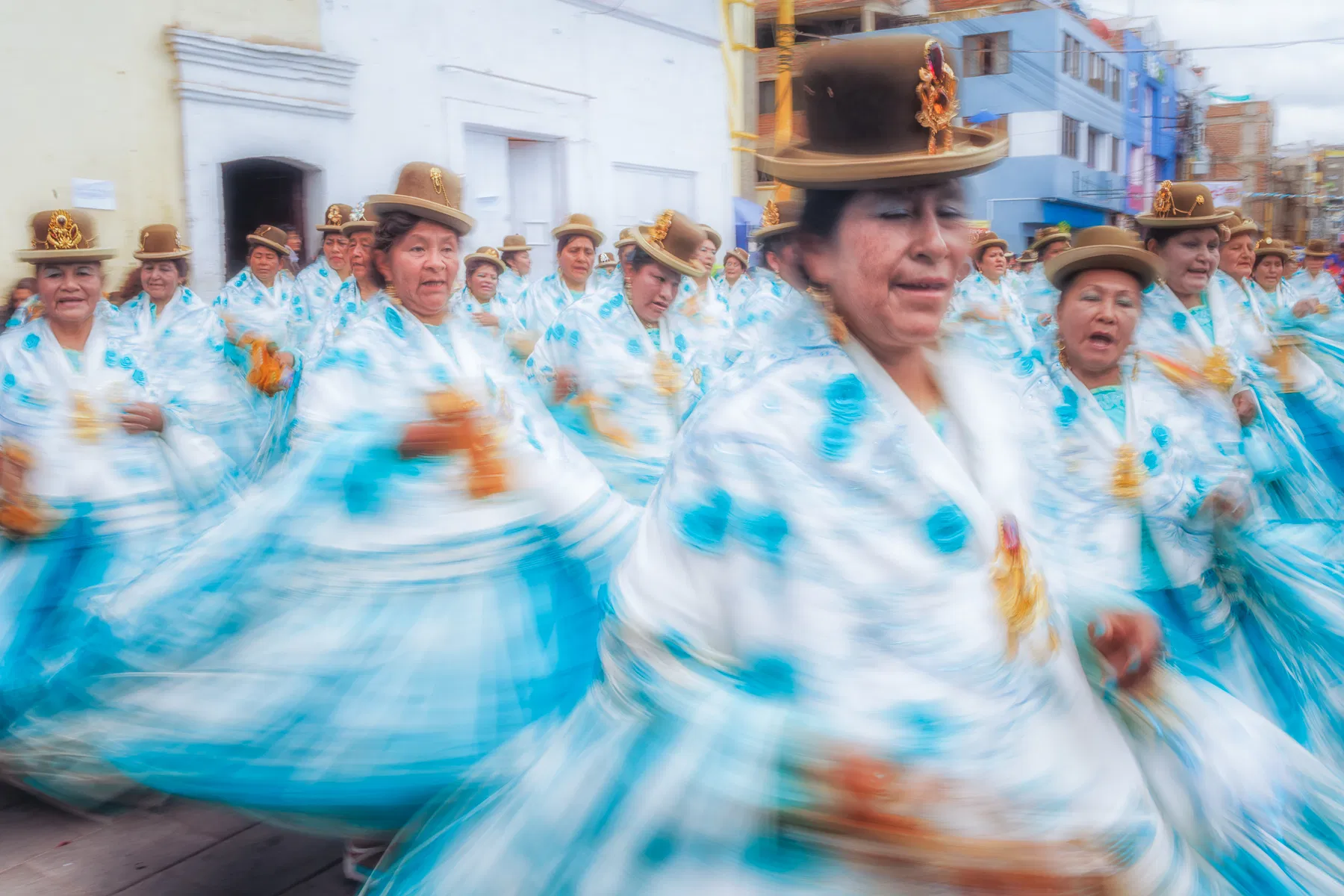
2. “The Grace of Dance” – Giampiero D’Antonio
Giampiero D’Antonio captured this stunning image in Puno during the Festival in Honor of Our Lady of Candelaria, a celebration that intertwines faith, tradition, and community. The swirling motion of the dancers’ skirts transforms the street into a living tapestry, reflecting centuries of Indigenous and colonial heritage in a single, kinetic moment, capturing the joy, dedication, and collective energy of a people for whom dance is both ritual and identity. It is a celebration of Peru’s folkloric heart, offering a glimpse into a culture where movement, color, and devotion converge in a festival that is at once intimate and monumental.

3. Untitled, Puno – Eduardo Ortiz
One of the most compelling rising street photographers of today, Chilean-born Eduardo Ortiz is renowned for his vibrant, layered depictions of everyday life accross the world. Here, in the Peruvian City of Puno, he constructs a painting-like tableau in which daily routine and spiritual presence quietly intersect. A seated figure anchors the foreground, while a brightly adorned altar and passing pedestrians create subtle cross-currents of movement behind him. The saturated greens and warm architectural tones lend the image a distinctly Andean atmosphere, reflecting a city where faith, color, and ordinary ritual coexist seamlessly within the same frame.
– Read our profile on Eduardo here.
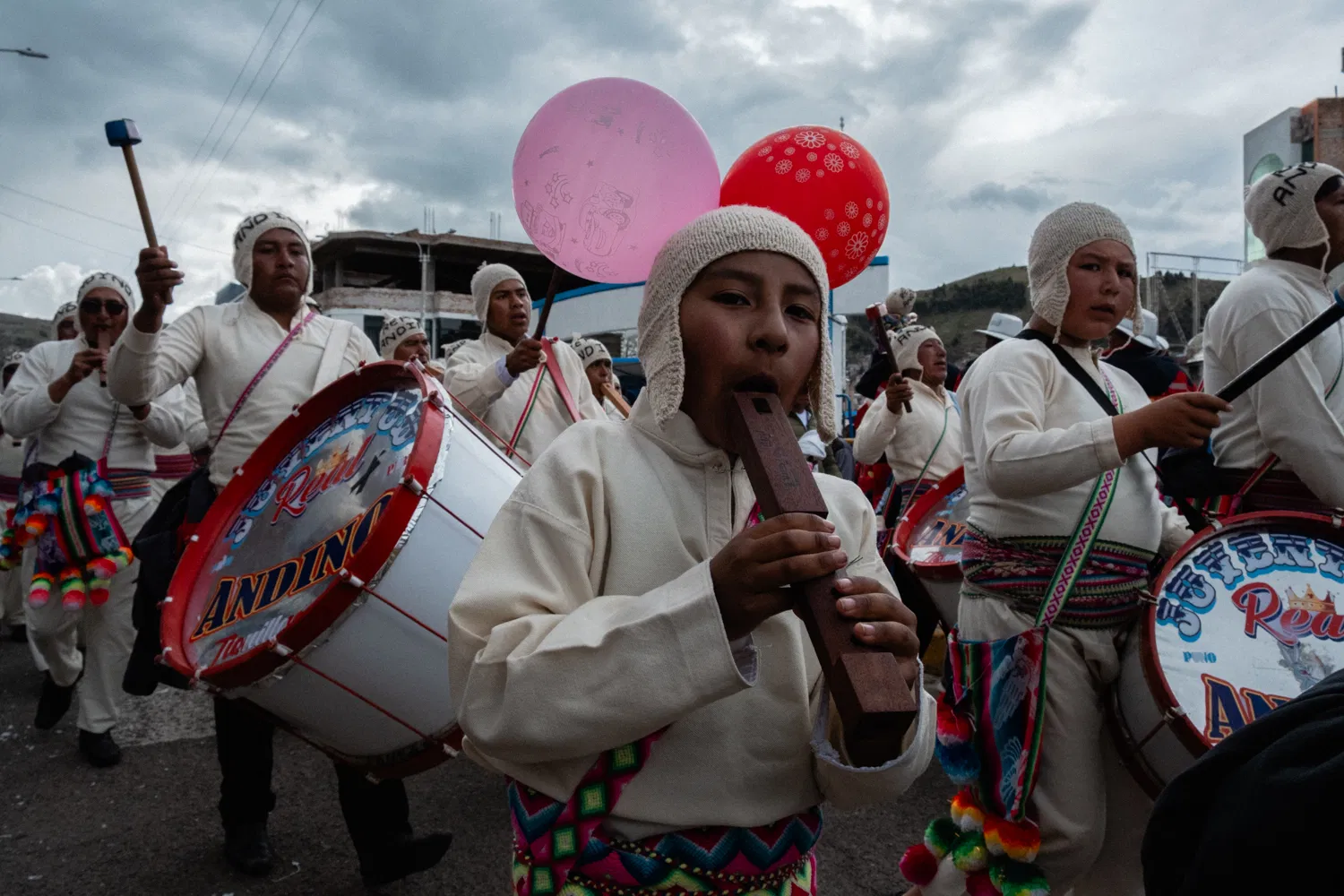
4. “Carnaval”– Stéphane Allemand
In Puno, Carnaval transforms the streets into stages of collective memory, where music and dance express a living Andean heritage shaped by Indigenous and colonial histories. It is a celebration rooted as much in community as in spectacle. Perfectly timed and framed, this image by Stéphane Allemand centres on a young flautist, two balloons rising above him in quiet contrast to the disciplined formation around him. The image speaks to continuity, how tradition is absorbed early and performed together, capturing the communal spirit that defines both Puno and Peru more broadly.
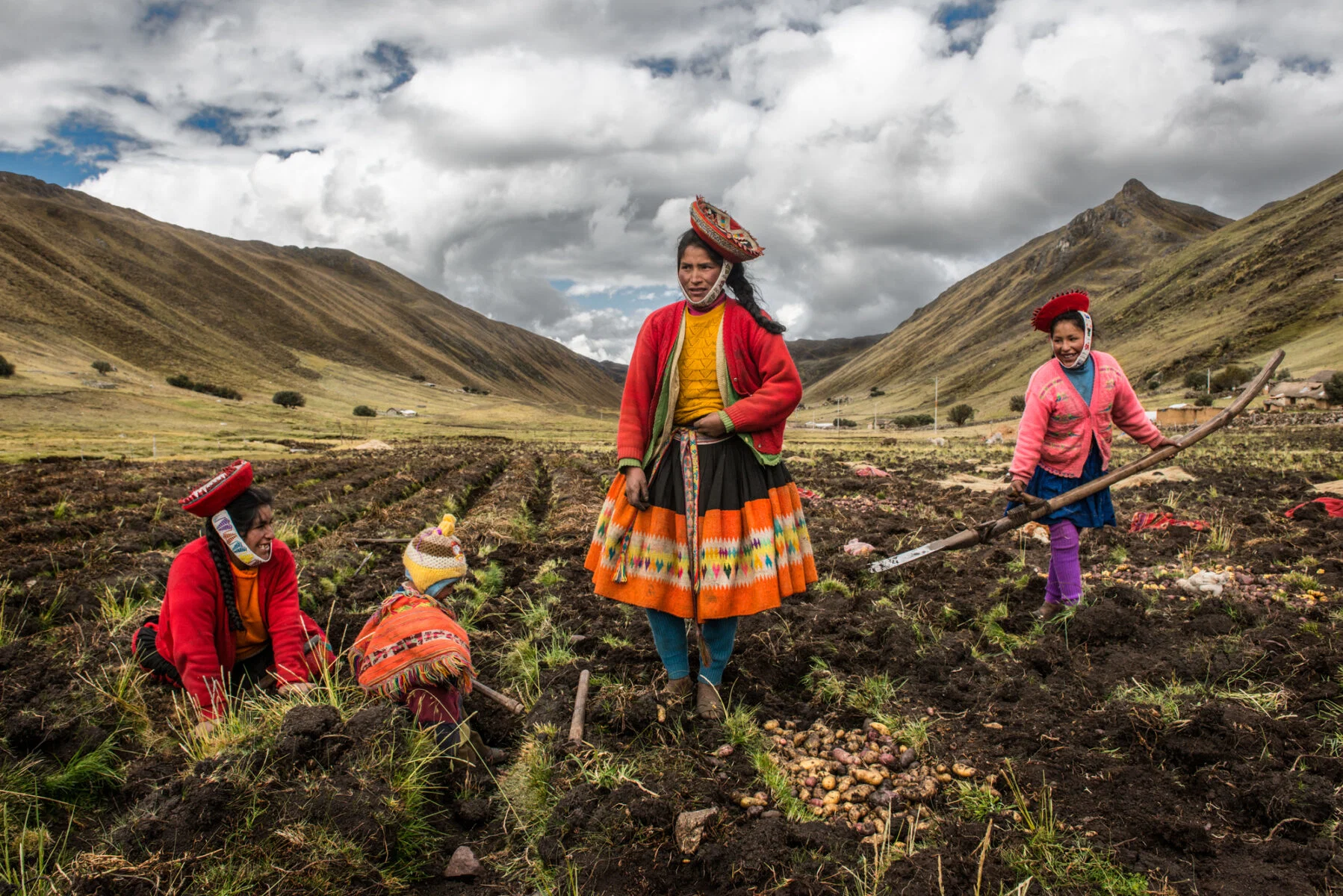
5. Untitled, from the series “Harvest” – Luis Fabini
Harvest, Luis Fabini’s long-term series in the Peruvian Andes, is a meditative exploration of ancestral agricultural systems and the fragile yet enduring relationship between communities and the land they cultivate. Rooted in practices that trace back to the Incas, the project honors agro-biodiversity and the cyclical rhythms that continue to shape Andean life. In this stunning portrait, Fabini photographs members of this remote Andean community frontally against the vast highland terrain they call home, lending them a quiet monumentality. The freshly harvested potatoes gathered at their feet become both sustenance and symbol, the tangible result of knowledge passed down through generations. Reminiscent of Social Realist painting, the soft, diffused light gives the scene a painterly texture, echoing the North Light of Dutch masters to draw out the grit of the soil and the intricate weave of traditional textiles, elevating labor into something enduring and dignified.
– Read our article on the project here.
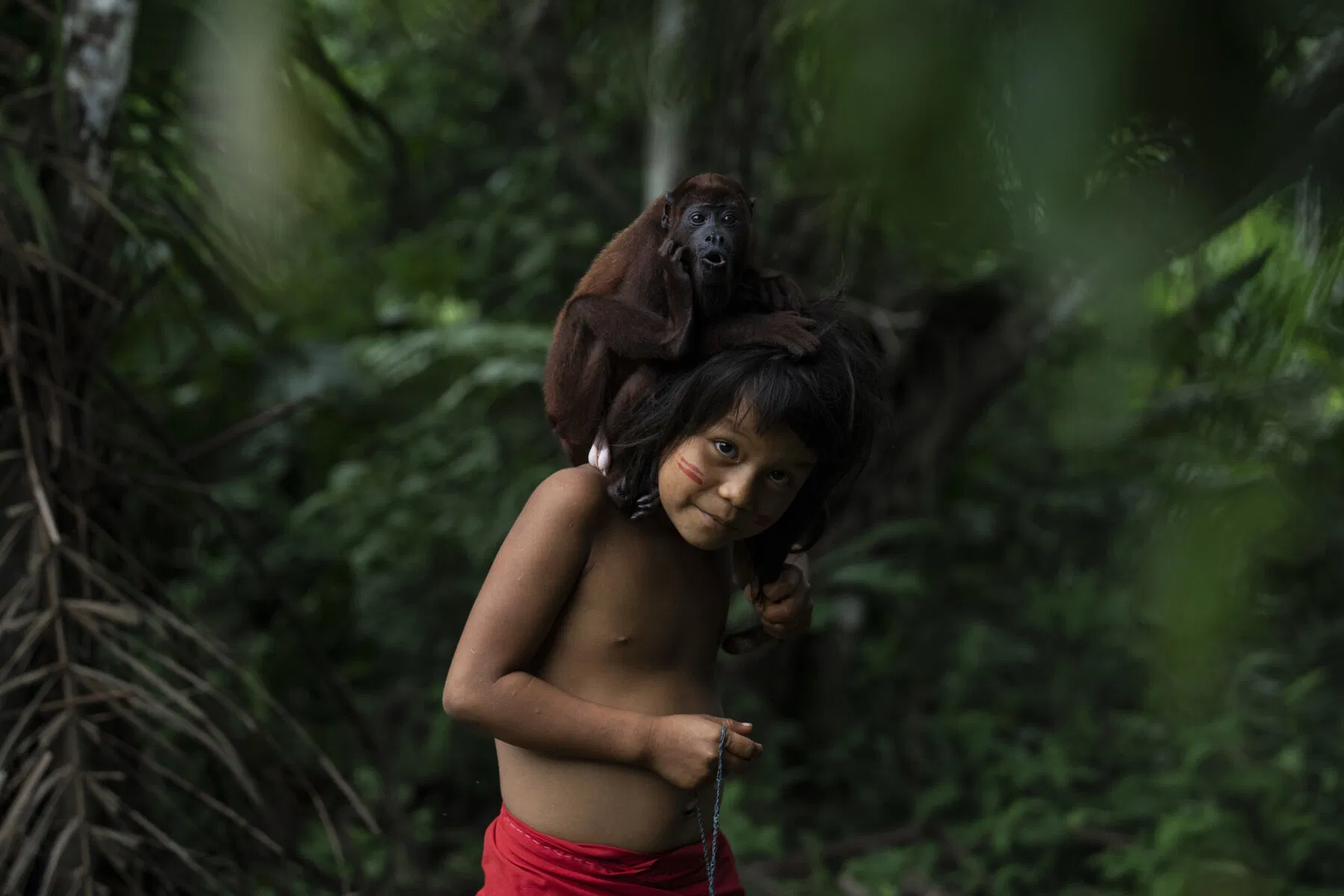
6. “Young boy and his monkey”, Amazônia – Goran Jovic
In the vast stretch of rainforest that makes up the Peruvian Amazon, many Indigenous communities maintain ways of life that are deeply intertwined with the natural world, Groups such as the Shipibo-Conibo, Asháninka, and others have lived here for generations, practicing sustainable subsistence, ceremonial traditions, and cosmologies that place humans within, not above, the living landscape.
Goran Jovic’s portrait reframes that enduring relationship through the quiet companionship of a child and a red howler monkey. Rather than turning the Amazon into an exotic spectacle, the image honours a world in which human life is inseparable from its more-than-human neighbours, where daily experience and the rhythms of the forest are woven together in ways that define identity and belonging.
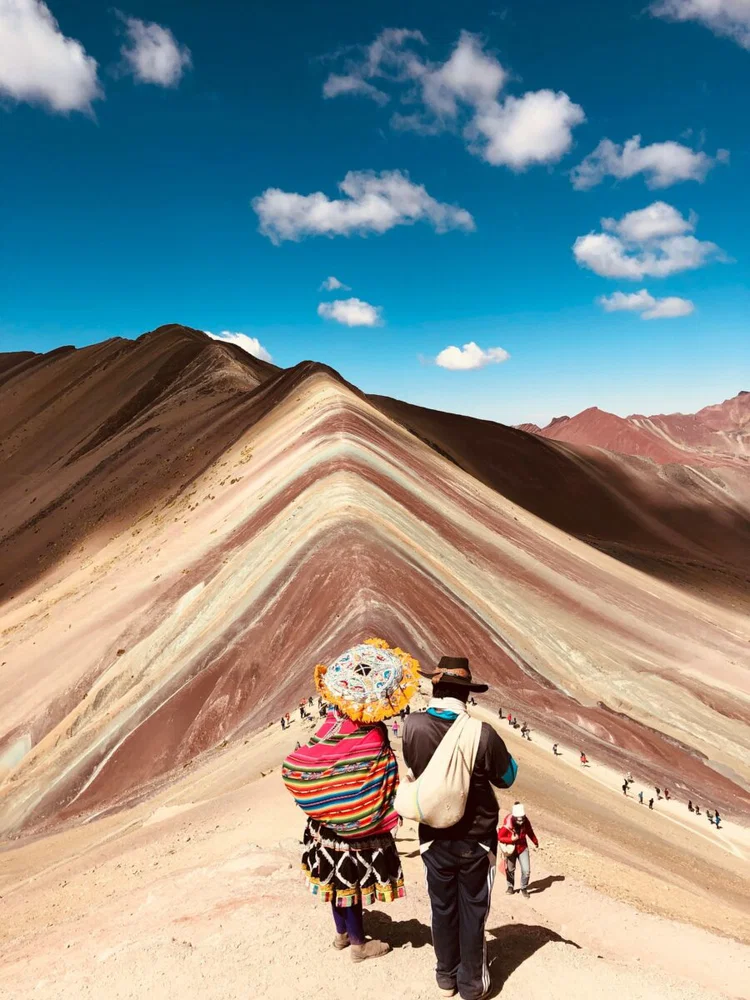
7. “Rainbow Mountain” – Gabriel Silva Suares
Gabriel Silva Suares’ photograph of Vinicunca, or “Rainbow Mountain”, captures one of Peru’s most striking natural wonders and iconic landmarks, where geology itself becomes a work of art. The mountain’s vibrant stripes speak not only to mineral diversity but to the slow, transformative forces of the Andes, a landscape shaped over millennia and revealed only recently as glaciers receded. It celebrates the country’s high-altitude terrain as a space of both beauty and endurance, a place where human presence is small against the vast, colorful sweep of the mountains, evoking the sublime scale and timeless rhythms of the Peruvian Andes.
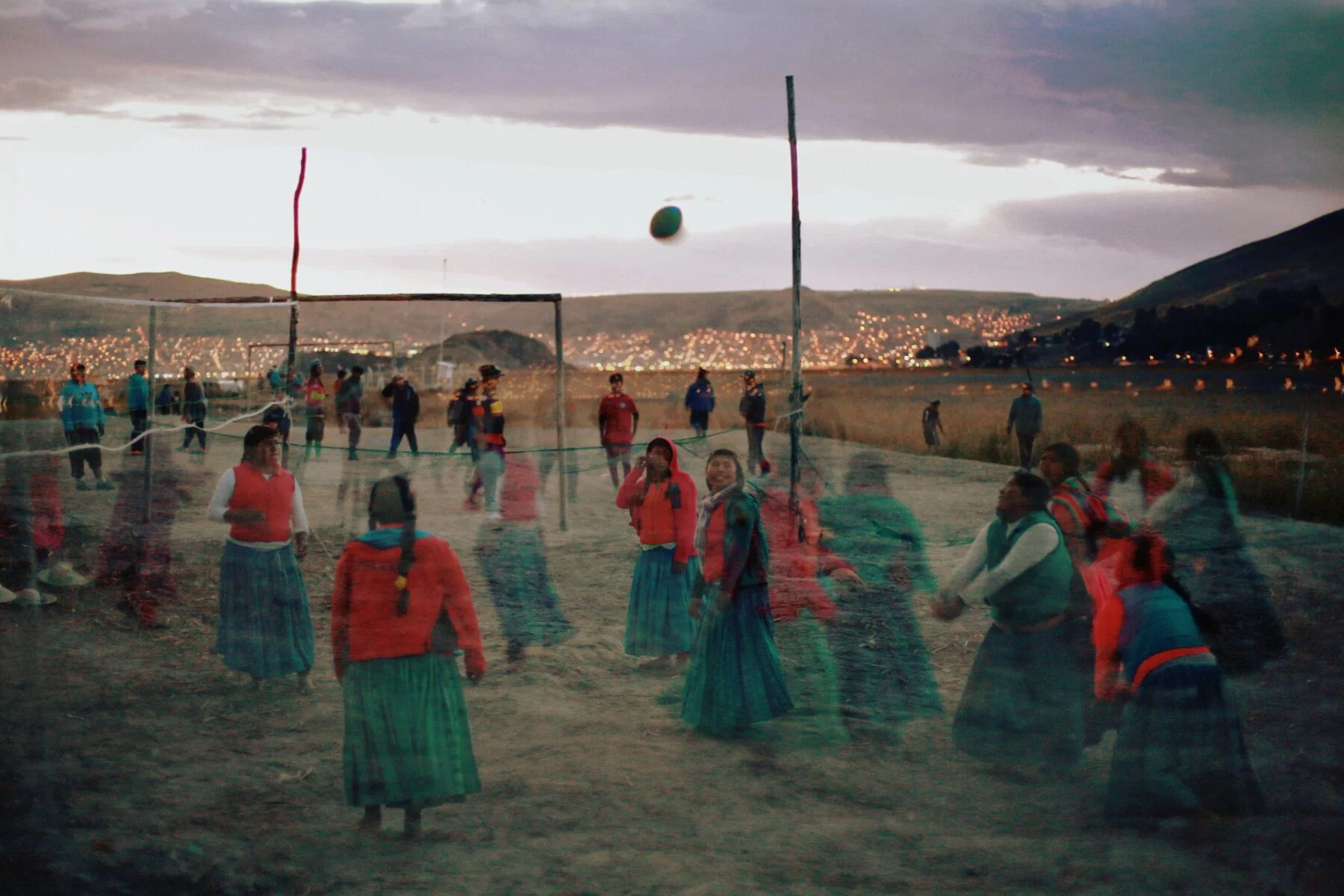
8. “Titicaca” – Felicia Simion
On the shores of Lake Titicaca, one of the most iconic landscapes in the Andes and often considered a cultural heart of the Altiplano. It is world-renowned as one of South America’s largest lakes and the world’s highest navigable body of water, yet in this captivating image by Felicia Simion foregrounds not its monumentality but the spirit of the people who call it home. The high plateau around Titicaca has long been inhabited by Quechua, Aymara, and Uros communities whose lives are intertwined with the lake’s rhythms, shared labor, cooperative traditions, and deep social bonds woven through generations of farming, fishing, weaving, and communal work.
Rather than stopping time with a single, crisp moment, the photographer embraces motion and layering to convey movement and togetherness, capturing the ethereal blur of figures in play becomes a visual echo of the interdependence and joy found within these tight-knit communities. Thus, the photograph becomes less a documentation of a game and more an expression of community life itself, resilient, active, and inseparable from the vast natural world that shapes it.
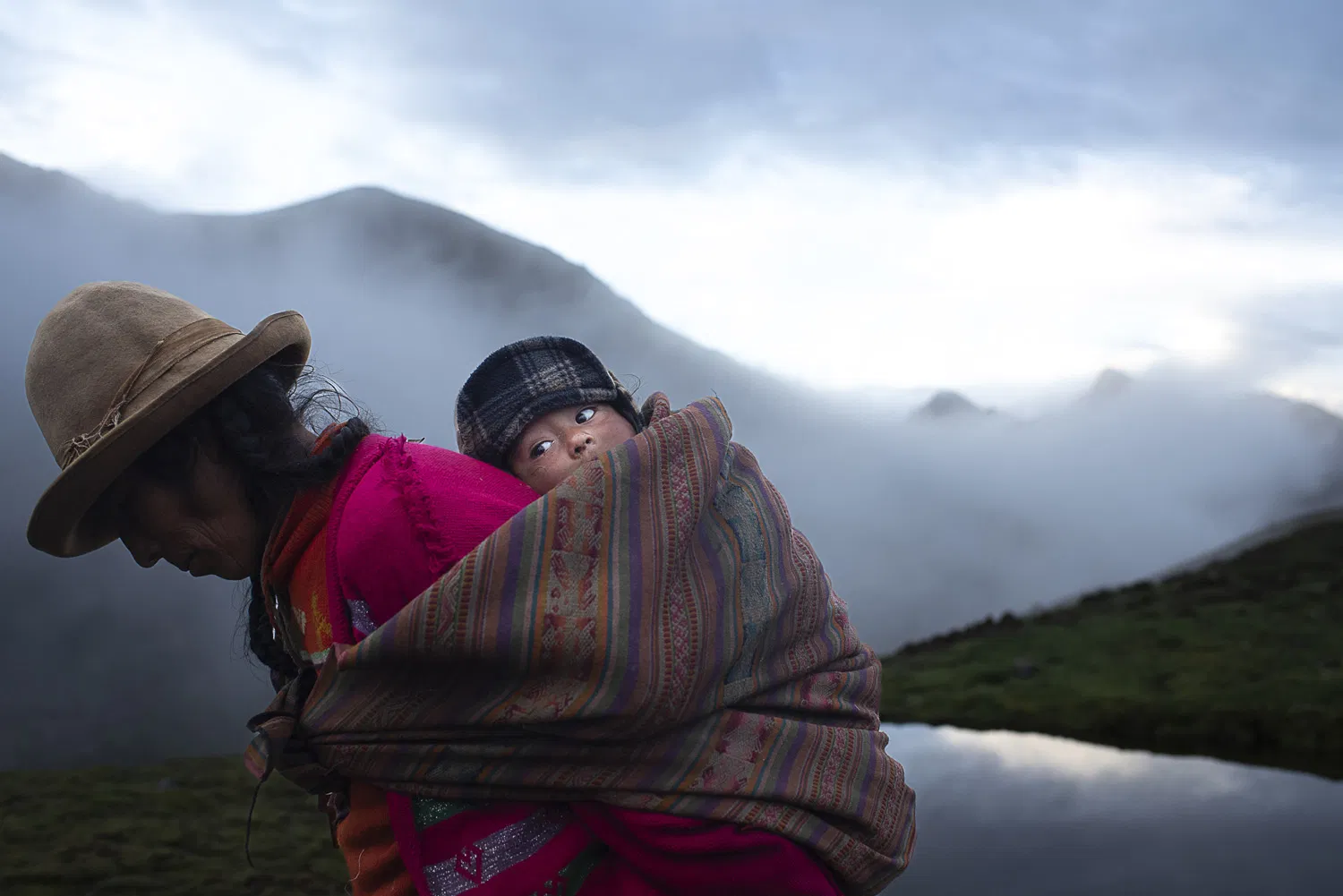
9. “Last Inca Community” – Ilaria Miani
This meditative portrait by Ilaria Miani, depicts a Q’eros mother and child, a quiet, enduring presence amid the mist-shrouded highlands of Peru. Linked by the woven carrying cloth, they embody a continuity of life and knowledge that stretches back to the Inca civilization, while the expansive Andean landscape beyond speaks to a profound connection with Pachamama and the Apus, a spirituality rooted in the rhythms of the earth and sky. This image celebrates both cultural endurance and humanity, offering a glimpse into a community that has survived centuries of change while maintaining a deep, reverent bond with the mountains that have always defined their world.
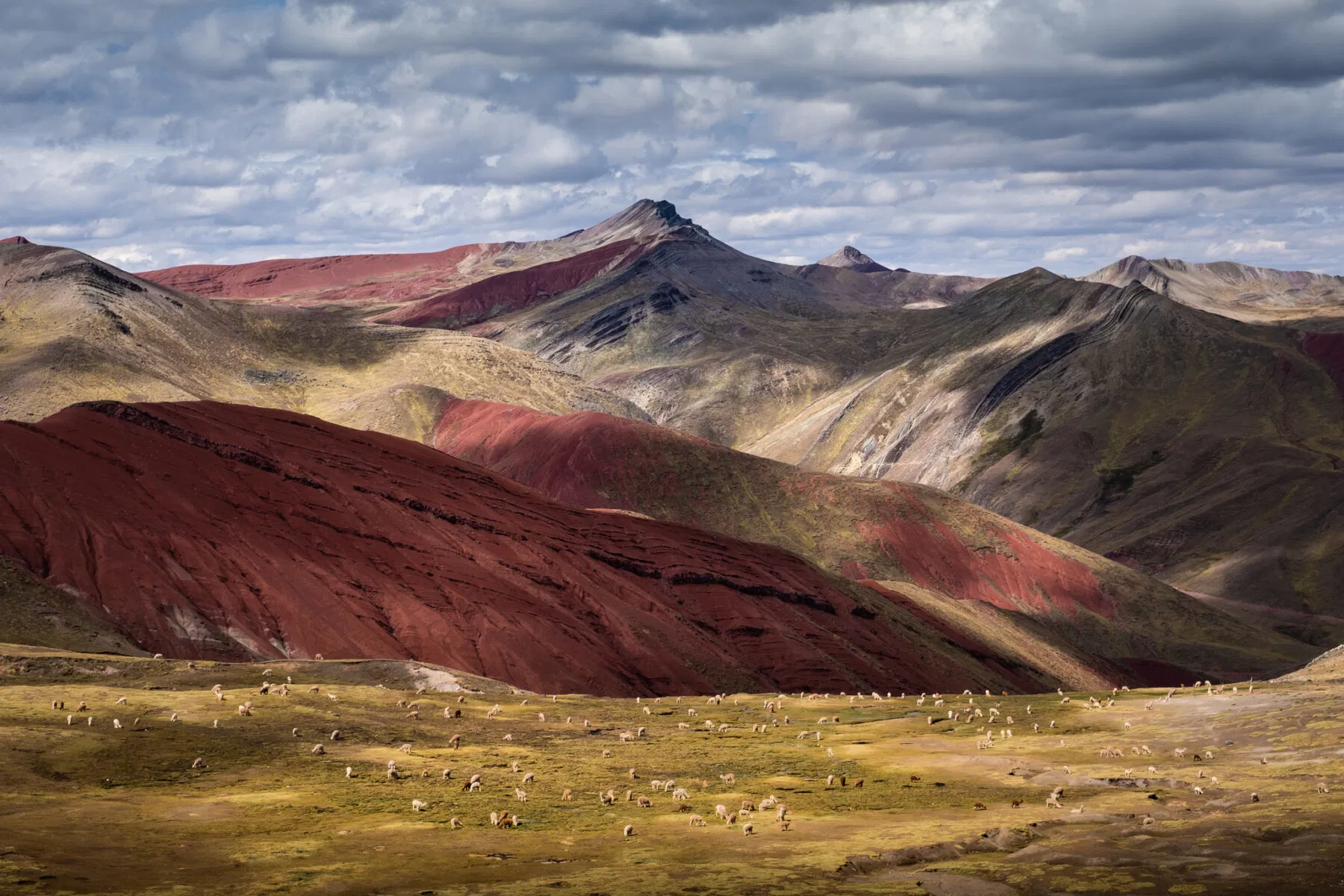
10. “Alpaca Kingdom”, Palccoyo, Highlands of Cusco – Nicolas Castermans
Nicolas Castermans’ wonderful landscape reveals a lesser-known corner of the Cusco highlands, where Palccoyo’s striking red valleys and rolling mountains offer a quieter counterpart to the famous Rainbow Mountain. The small herd of alpacas scattered across the yellow meadows evokes the enduring rhythms of highland life, where people and animals coexist with the dramatic landscape. It is a wonderful embodiment of Peru’s highland traditions and geological diversity, showing a land shaped over millennia yet still alive with pastoral and natural vitality.
All images © their respective owners