

From the golden spires of spiritual devotion to the chaos of urban survival, the photographic history of Thailand is a study in high-contrast harmony, where ancient ritual and rapid modernization live in a perpetual, colorful embrace.
Known to the world as the “Land of Smiles,” Thailand’s visual narrative goes far deeper than the marketing of paradise, revealing a nation defined by its fierce resilience and its “Mai Pen Rai” philosophy of grace under pressure. It is a country where the sacred saffron of a monk’s robe shares the frame with the blue smoke of a Bangkok street stall, and where a deep-seated reverence for tradition provides the backbone for moments of radical social change.
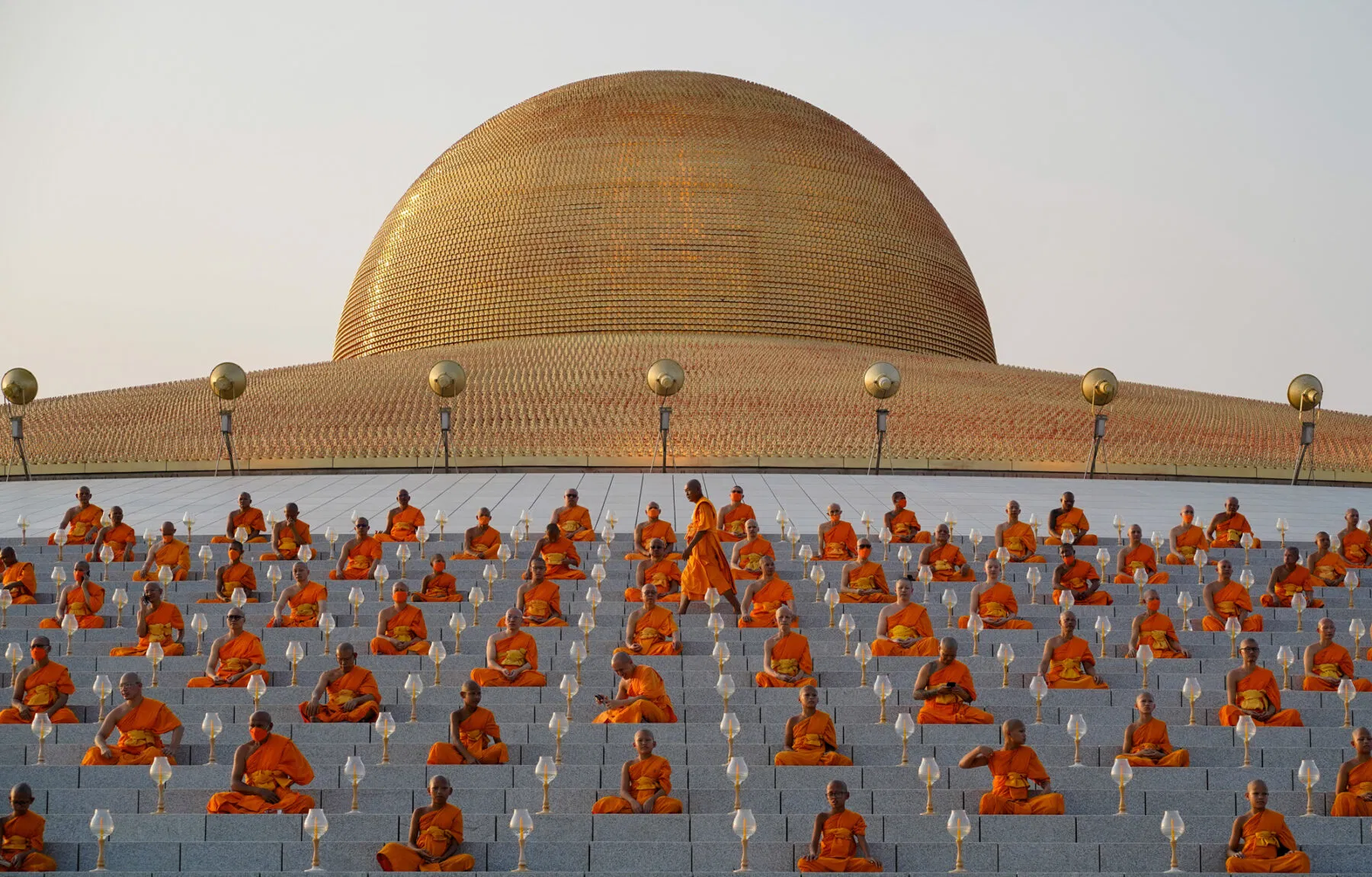
1. “Makha Bucha Day” – Aleksandra Lasota
Makha Bucha marks one of the most important dates in the Buddhist calendar, commemorating the moment when 1,250 monks gathered spontaneously to hear the Buddha preach, an event that has come to symbolize unity, discipline, and collective devotion. At Wat Dhammakaya, just outside Bangkok, this ancient tradition is observed on a monumental scale, reflecting both the continuity and evolution of Thai Buddhism in the modern era.
Photographer Aleksandra Lasota has rendered this monumental scene with masterful precision. Repetition, symmetry, and scale transform individual presence into collective form, echoing the core Buddhist principles of order and mindfulness. Anchored by the immense Dhammakaya Cetiya in the background, the image presents belief not as abstraction, but as lived, embodied practice, where ritual, architecture, and community converge into a single, striking expression of faith in contemporary Thailand.
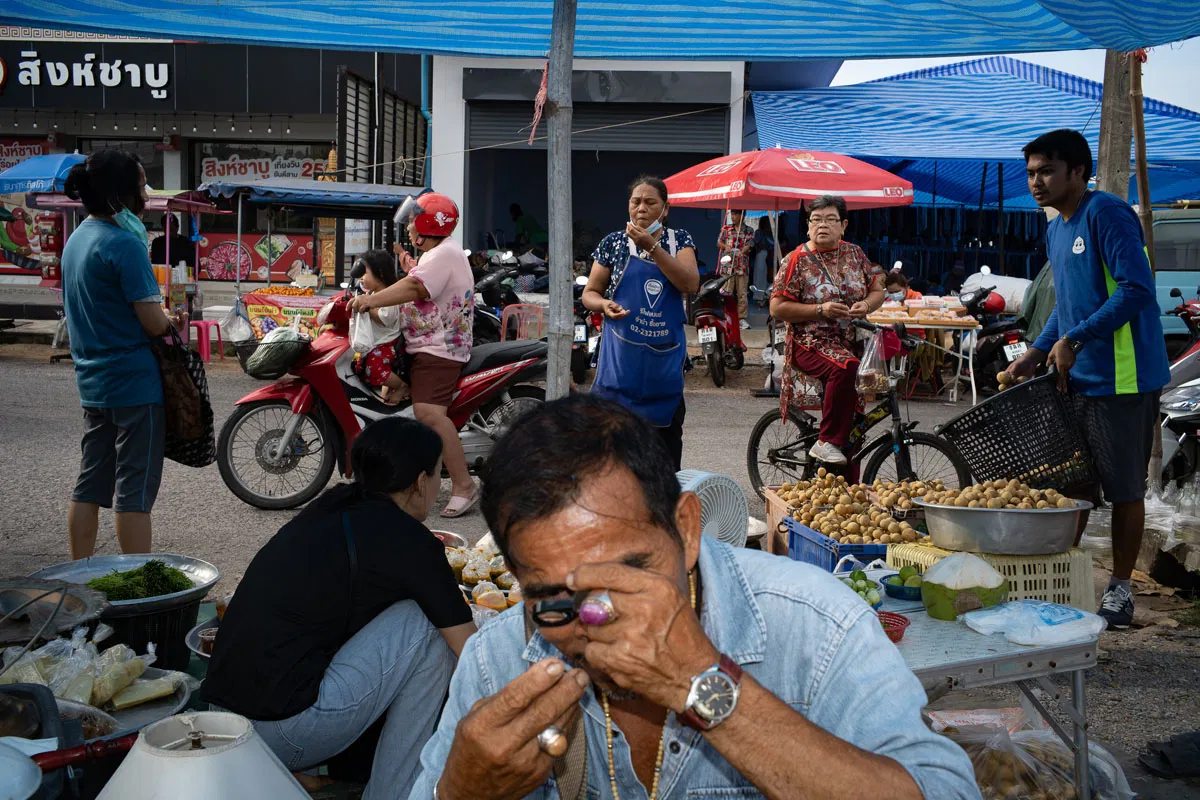
2. “Monk Engine ” – Tanakorn Tia
This street scene in the southern city of Songkhla depicts a man in deep concentration as he inspects a Buddhist amulet through a magnifying lens. In Thailand, these small, blessed talismans are believed to provide protection and good fortune, making them highly prized by collectors and faithful alike who search for specific markers of age and origin. Surrounding this quiet focus is the raw energy that typifies Thai street markets: vendors selling fresh fruit, families navigating on motorbikes. By framing this intimate moment of scrutiny amidst the noise of the street, Thai photographer Tanakorn Tia captures how faith in his homeland is not confined to the silence of a temple, but is an active, tangible part of everyday life, central to culture and commerce.
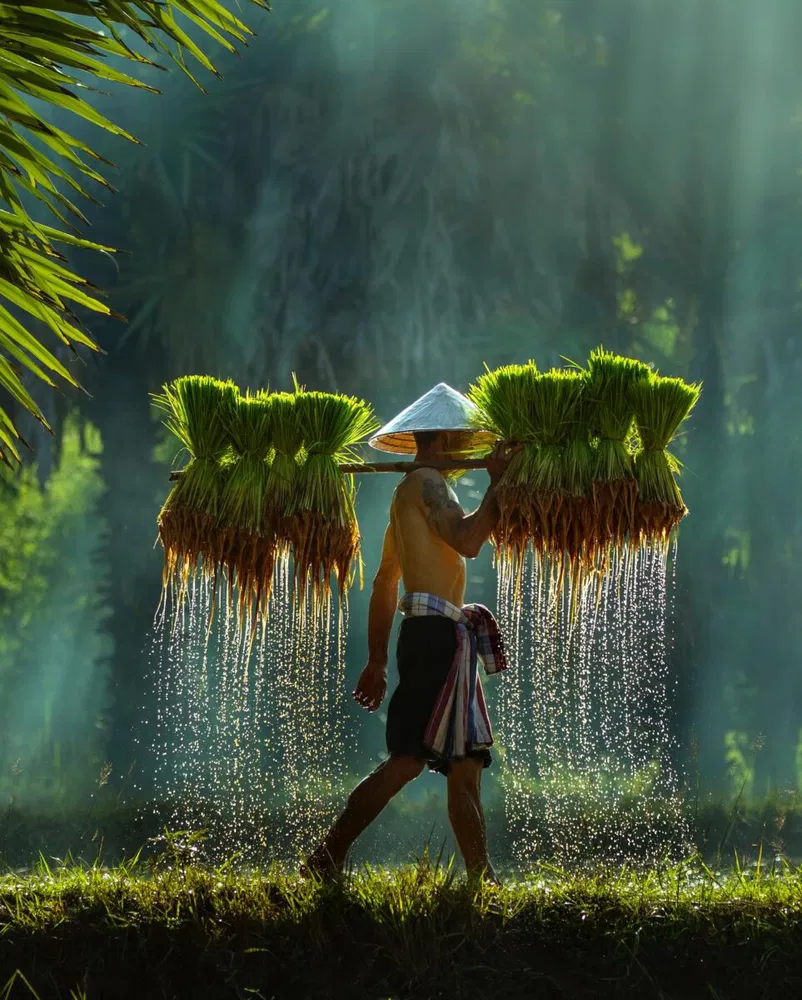
3. Sakon Nakhon, Isan Region – Mahendra Bakle
Rice cultivation remains fundamental to Thailand’s cultural and social fabric, shaping both its landscape and its way of life. In this image captured in the Isan region Indian photographer Mahendra Bakle reduces that vast legacy to a single, resonant moment, framing agricultural labor not as spectacle, but as quiet continuity. It offers a counterpoint to Thailand’s global image, anchoring the nation in traditions that long predate modern tourism and urban growth.
Bakle’s command of light elevates the scene without overstatement. The figure is briefly monumentalized through precision and timing, suspended between movement and stillness. Technically assured yet emotionally restrained, the photograph succeeds by honoring everyday labor as a defining, enduring expression of Thai identity.
– Read our editorial on Mahendra Bakle here.
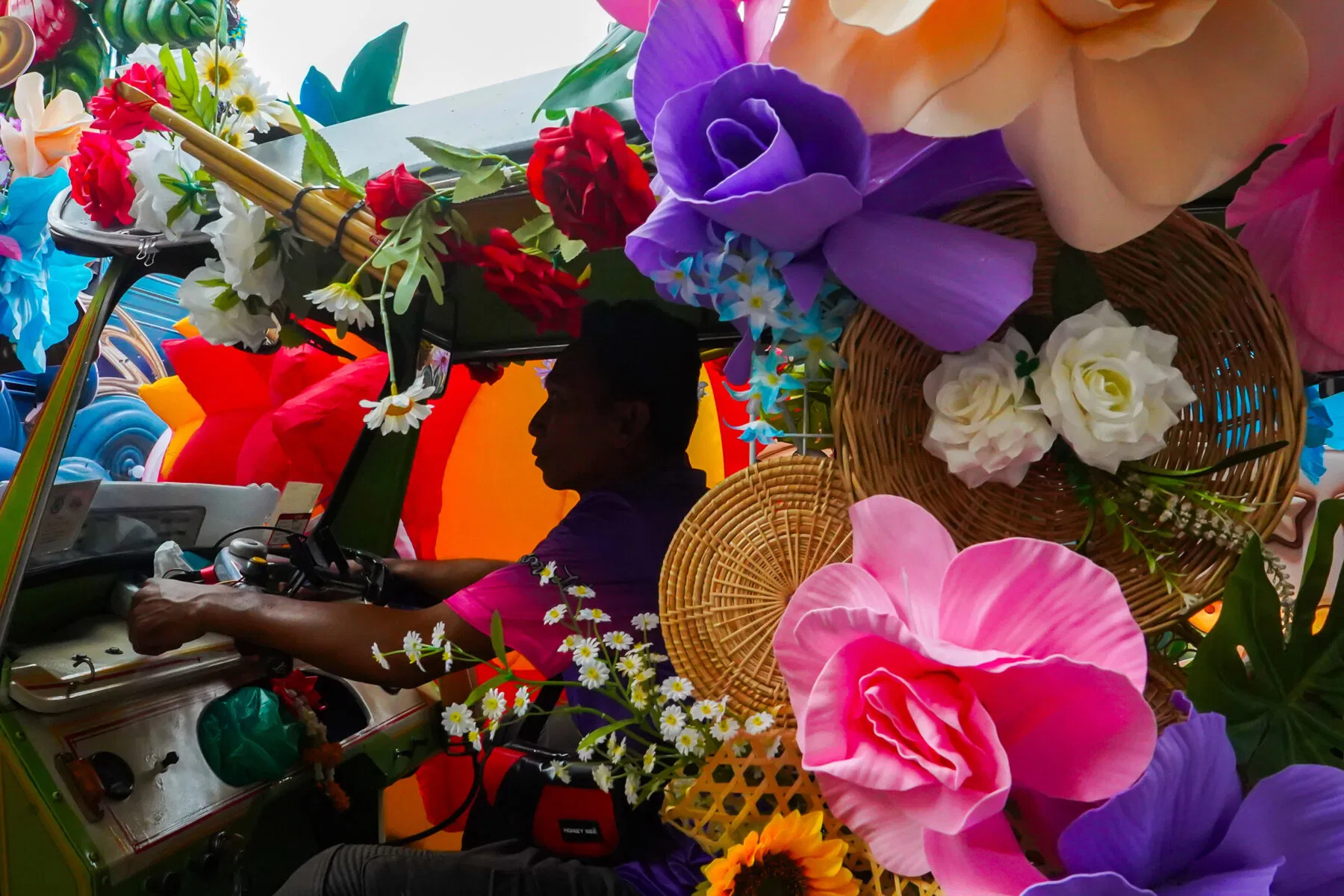
4. “Bloom Ride” Bangkok – Phatsakorn Bundasak
Shot from inside a flower-laden tuk-tuk, this image by Thai photographer Phatsakorn Bundasak transforms a routine ride into a vibrant exploration of Thai spiritual life. The driver sits in partial shadow, his face falling into silhouette, which creates a striking contrast with the vivid artificial blooms that crowd the frame. These floral decorations are a common sight in Thai transportation, serving as modern iterations of the traditional Phuang Malai (flower garlands). In Thai culture, such displays are rarely just aesthetic; they are often intended as offerings to Mae Yanang, the ancient goddess of journeys, believed to protect vehicles and their passengers. The tight, forward-facing composition pulls the viewer straight into this sacred yet mundane space, allowing the colors to dominate while the silhouetted figure anchors the chaotic beauty with a calm, graphic presence. It is a clever piece of visual storytelling, balancing the high-energy pulse of Bangkok’s streets with the quiet, persistent influence of local belief.
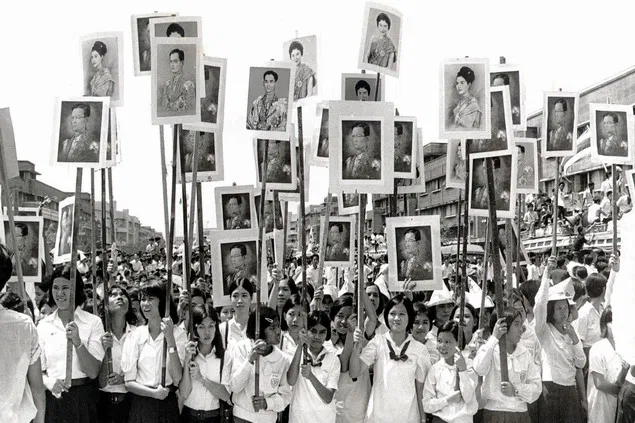
5. Protesters, October 14, 1973
The October 14, 1973, uprising marks a pivotal “watershed” moment in Thai history, representing the first time in the modern era that a popular movement from below successfully toppled a military dictatorship. Sparked by student-led demands for a permanent constitution and an end to the “Three Tyrants” regime, the protests grew into a massive unification of students, workers, and the burgeoning middle class. This event fundamentally altered the Thai political landscape, shifting power away from purely military circles and establishing the people as a decisive political force. In this frame, the protesters’ decision to carry portraits of the King is deeply symbolic; it reflects a unique cultural belief in the Monarchy as a moral arbiter and a sanctuary for the people during times of state crisis. By framing their struggle for democracy within their reverence for the King, the students signaled that their actions were not a rebellion against the nation’s foundations, but a plea for the Crown’s protection against authoritarianism, a dynamic that culminated in the King’s direct intervention to end the violence and appoint a civilian government
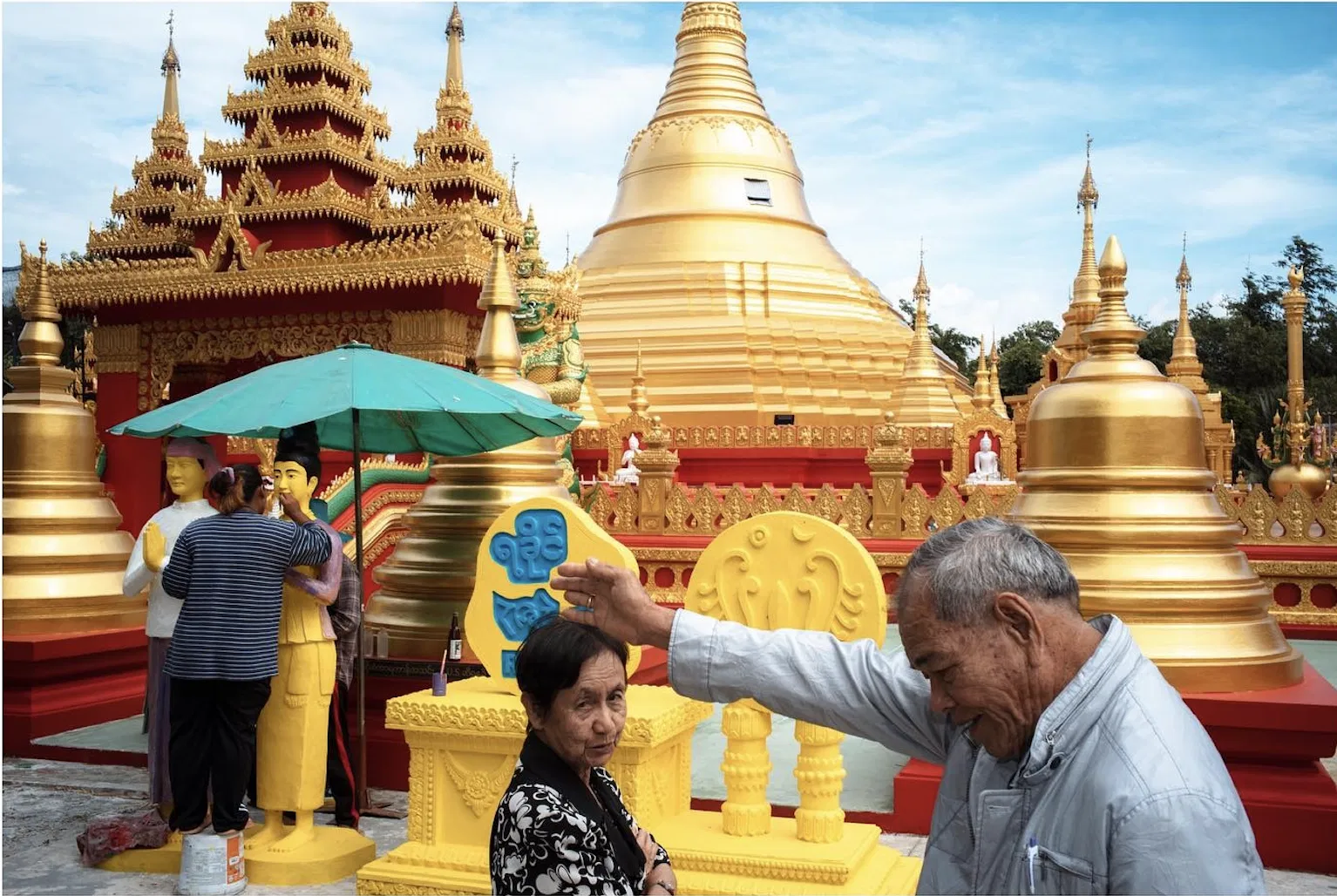
6. Untitled, Songkhla – Sakulchai Sikitikul
Captured at Wat Thawon Wararam (also known as Wat Hua Khao) in Hat Yai, Songkhla, this image showcases the unique cultural mosaic of Southern Thailand. While the temple is located in Thailand, the background is dominated by a majestic golden stupa built in the Burmese style, a replica of the Shwedagon Pagoda that serves as a spiritual anchor for the local community. Thai photographer Sakulchai Sikitikul has masterfully framed a candid moment of everyday devotion; in the foreground, a quiet gesture of human connection unfolds, while to the left, a worker meticulously maintains a statue under the shade of a vibrant teal umbrella. This scene perfectly illustrates how Buddhism is not merely a religion in Thailand, but the very fabric of life, where the sacred and the mundane exist in a continuous, colorful harmony.
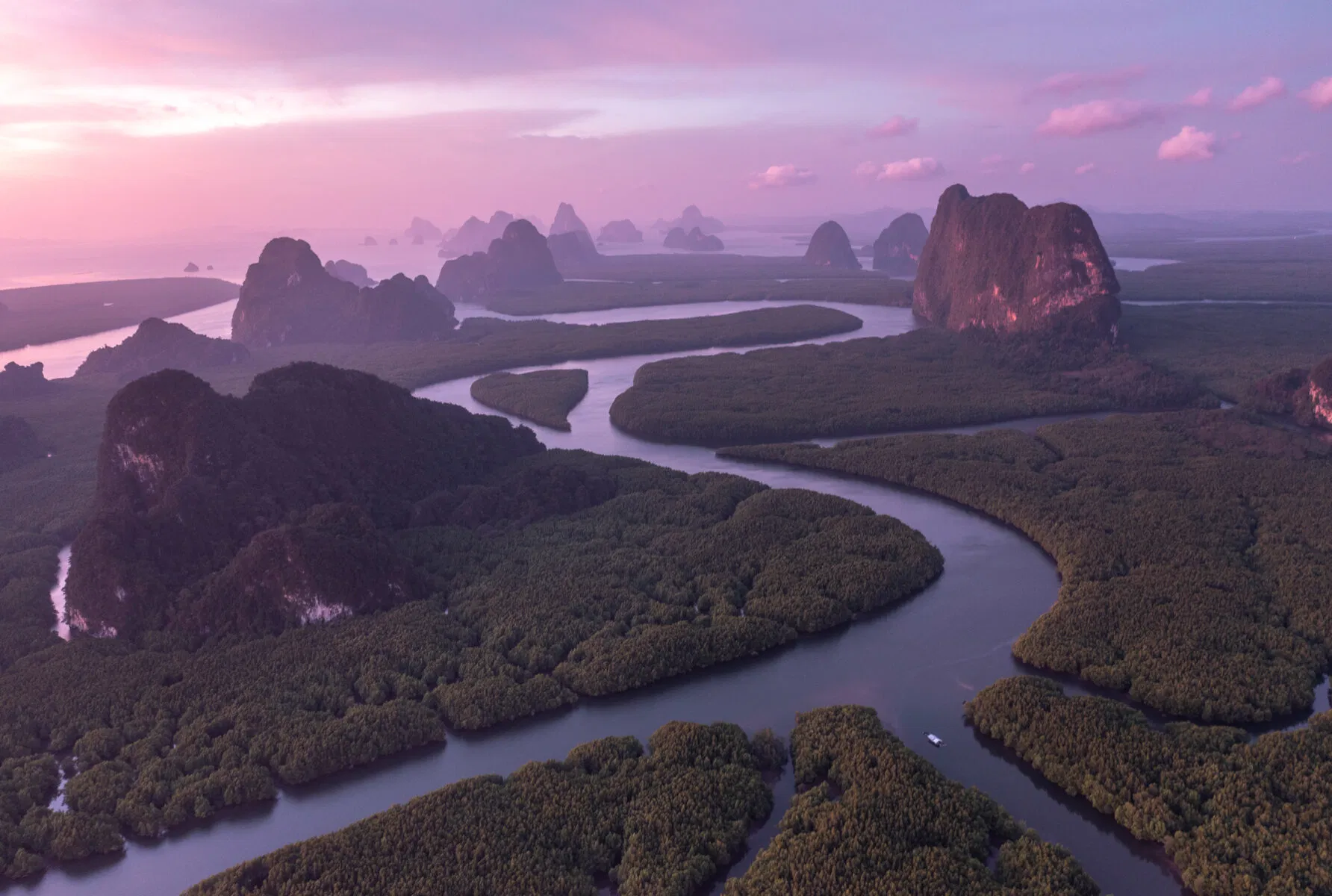
7. “Everflow” – Henryk Welle
This aerial perspective captures the primordial rhythm of Phang Nga Bay, where the winding arteries of the Andaman Sea meet Thailand’s largest mangrove forest. Beyond its aesthetic lavender hues, the image highlights a critical “blue carbon” ecosystem that serves as a natural fortress against coastal erosion and a vital sanctuary for local biodiversity. These winding channels are not just scenic paths; they are the traditional lifelines for the Chao Lay (sea people) and local artisanal fishermen who have navigated these intricate brackish waters for generations. By emphasizing the immense scale of the mangroves against the towering limestone karsts, German photographer Henryk Welle underscores the importance of conservation in a region where the delicate balance between burgeoning tourism and ecological preservation is a constant, lived reality.
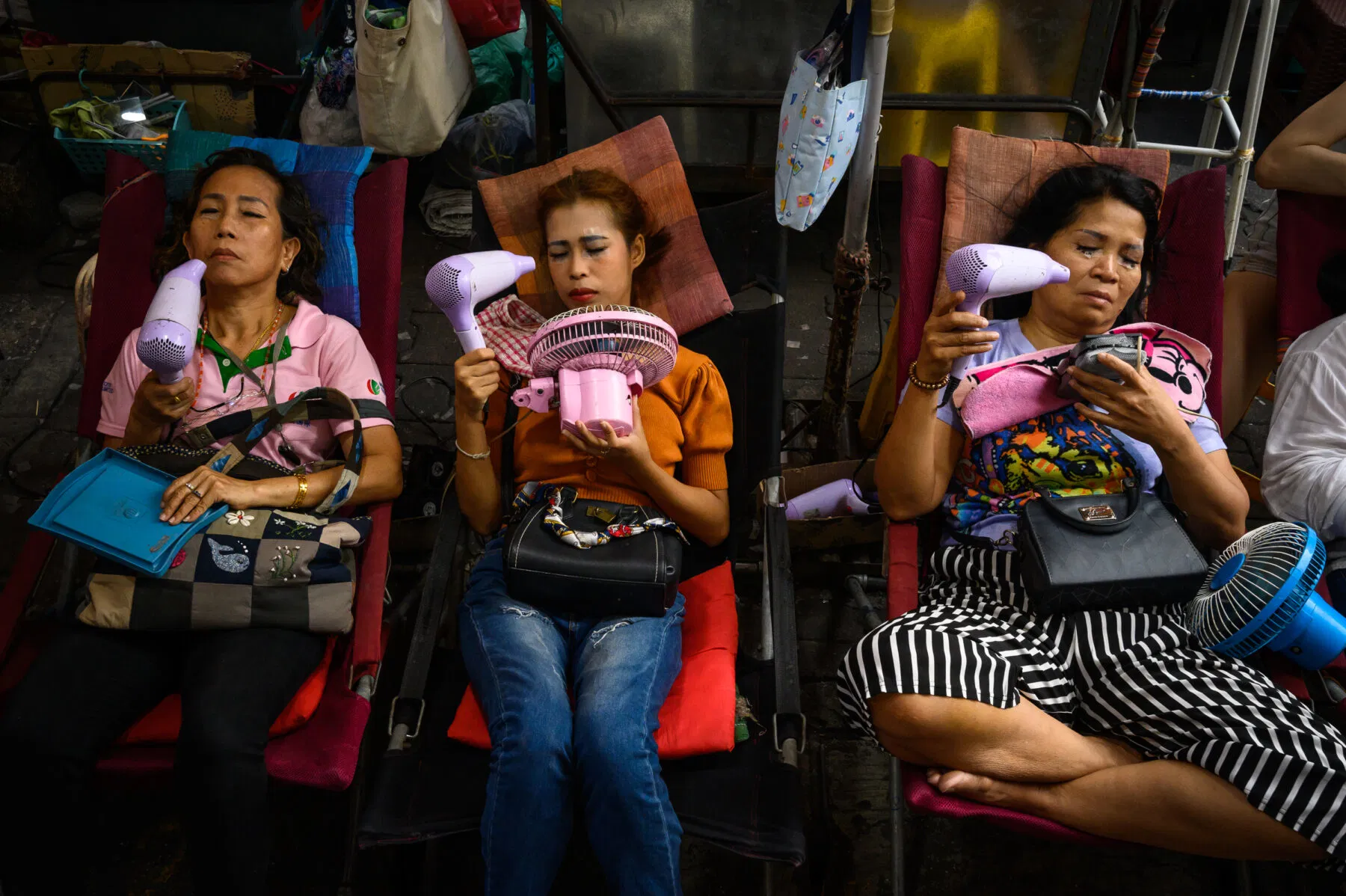
8. “Eyelash Blasters” Bangkok, 2020 – David Keith Brown
In Bangkok’s dense street economy, the boundaries between private ritual and public space often dissolve. This striking image by talented American photographer David Keith Brown depicts three women using hair dryers to help cement their newly acquired eyelashes in place, a small, fleeting moment of pause where beauty, patience, and practicality intersect under the pressure of heat and time. It reflects a city in constant motion, yet one that allows space for these shared, almost unspoken rituals to unfold in plain sight.
Selected as the Second Prize Winner by Steve McCurry, in The Independent Photographer’s 2022 Travel Award, Brown’s image transforms an ordinary scene into something both distinctly local and universally human, demonstrating how street photography can distill cultural nuance from everyday life without spectacle.
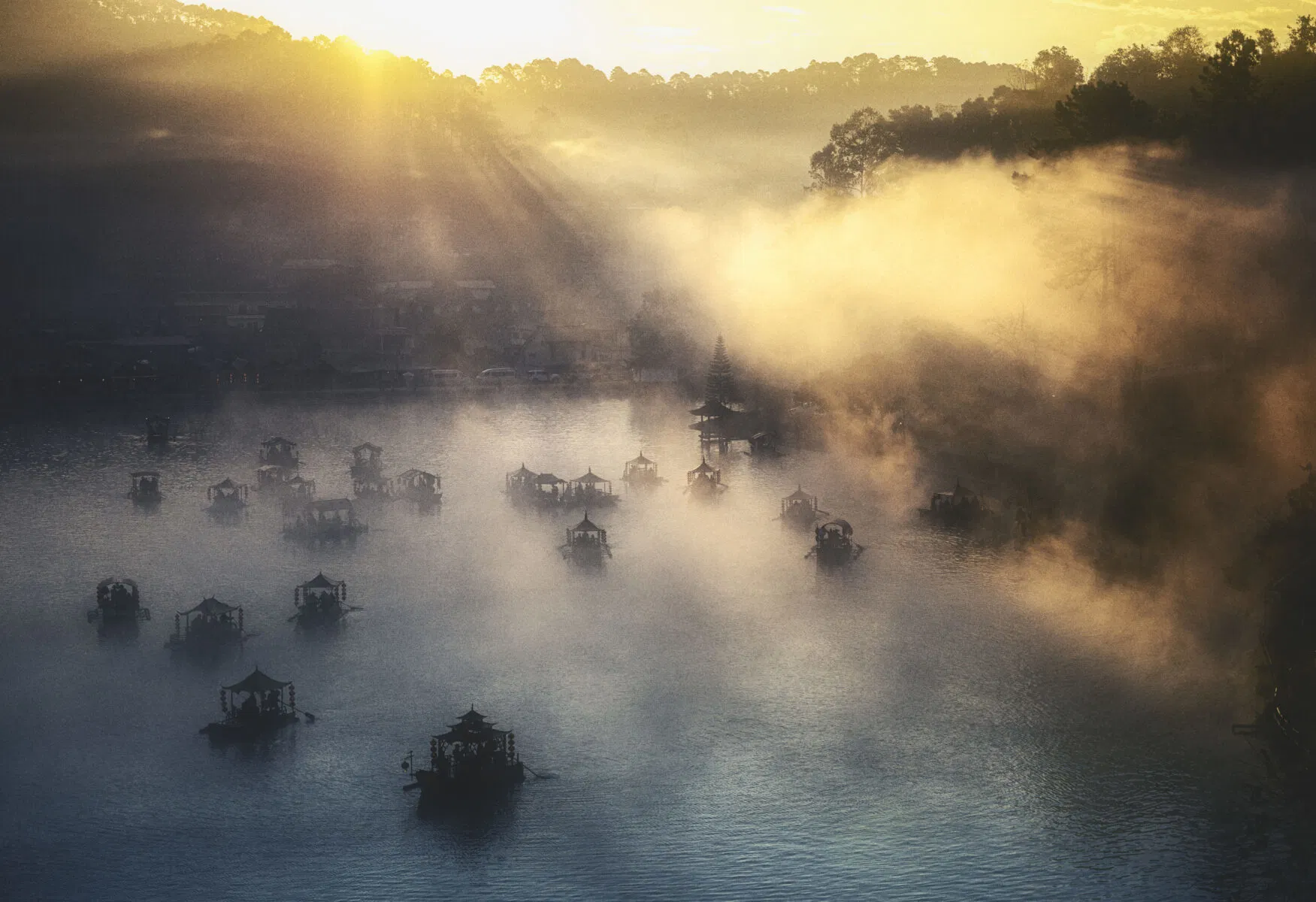
9. “Misty Sunrise”, Ban Rak Thai, Northern Thailand – Yosh Hase
Nestled in the highlands of Mae Hong Son province, Ban Rak Thai sits at the edge of Thailand’s northern frontier, a region shaped as much by migration and memory as by geography. Influenced by Yunnanese culture and sustained by tea cultivation, the village occupies a landscape where daily life remains closely tied to land and climate.
Singapore-based photographer Yosh Hase renders this everyday scene as a painting-like image. Diffused dawn light and layered mist soften the village and surrounding hills into subtle, warm tones. Traditional wooden boats drift across the reservoir in the foreground, a quiet reminder of rural rhythms shaped by water, work, and slow movement, offering a gentle tribute to everyday life in Thailand’s northern highlands.
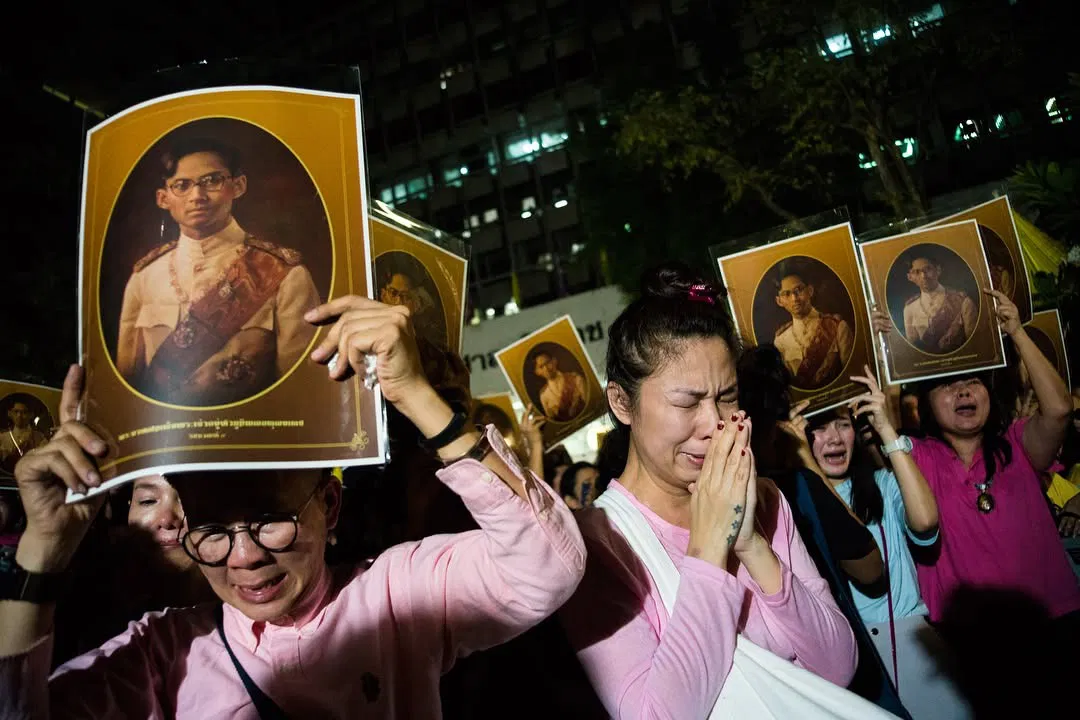
10. Bangkok, 13 October 2016 – Tavepong Pratoomwong
Photographed on 13 October 2016, this image bears witness to a moment of collective grief following the death of King Bhumibol Adulyadej, Rama IX of Thailand. Taken outside Siriraj Hospital in Bangkok, it shows mourners gathered in the dark, many holding portraits of the King, their faces marked by shock, sorrow, and disbelief. The photograph captures the instant when news of his passing rippled through the crowd, turning quiet anticipation into shared mourning.
For many Thais, including the photographer, Tavepong Pratoomwong, this was not the loss of a distant monarch, but of a figure woven into everyday life, present on television screens, banknotes, calendars, and cinema openings. King Bhumibol was widely regarded not as an untouchable ruler, but as a paternal presence, known for spending decades travelling the country to meet people and address their concerns directly. The raw emotion visible here reflects that relationship: deeply personal, intimate, and collective. In its closeness and immediacy, the photograph stands as a powerful document of national grief and a testament to the profound bond between a people and their King.
All images © their respective owners